
When Two Paths Cross Again: From Lorimar-Telepictures to the Spiritual Center of the Desert
By Nicholas Snow | Creator, Producer and Host of PromoHomo.TV®
Some moments in life are decades in the making. We may not recognize their significance when our paths first cross, but occasionally the universe brings people and experiences together again in ways we could never have anticipated.
My connection with legendary actress Linda Gray began nearly four decades ago, when our paths first crossed in the orbit of Lorimar-Telepictures, the Hollywood entertainment powerhouse behind some of the most influential television productions of the twentieth century. Among them was Dallas, the international phenomenon that transformed Linda into one of the world's most recognizable and beloved actresses.
Those were formative years in my own life as an entertainment journalist, producer, and LGBTQ+ activist. Hollywood was undergoing remarkable cultural changes, television was reaching audiences on an unprecedented global scale, and the emerging HIV/AIDS epidemic was profoundly affecting the creative community. Our respective journeys would continue through decades of personal and professional experiences, with neither of us imagining where they might eventually intersect again.
That intersection came through the Spiritual Center of the Desert in Palm Desert, California, a welcoming spiritual community we both attend. What began as a connection in the entertainment industry had found an entirely different context, one rooted in personal growth, community, and shared spiritual values.
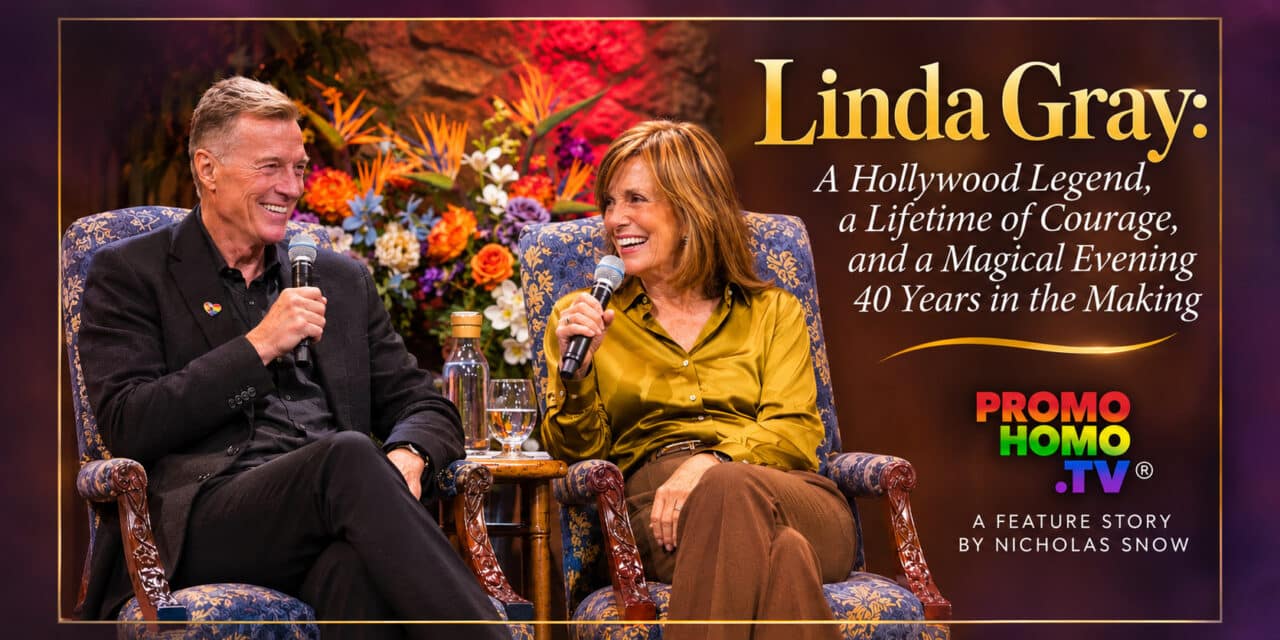
On Friday, November 13, 2026, I had the extraordinary honor of joining Linda onstage for an intimate, wide-ranging conversation celebrating her life and the experiences that have shaped the remarkable woman she is today.
The occasion brought together two chapters of my life that I could never have predicted would intersect in this way. And as the evening unfolded, I discovered that even after decades of following Linda's extraordinary career, there was still so much to learn about the woman behind the legend.
A Magical Evening at the Spiritual Center of the Desert
The evening began with a specially produced six-and-a-half-minute video tribute I had assembled to celebrate Linda Gray's extraordinary career. The audience greeted the montage with enthusiastic applause, setting a joyful tone for the conversation that followed.
As Linda and I settled into our chairs onstage, the conversation developed with a wonderful sense of ease. Her warmth, quick wit, and gift for storytelling made it possible to move naturally between hilarious Hollywood memories, professional accomplishments, and thoughtful reflections on life.
The audience responded enthusiastically throughout. There was laughter, applause, and an unmistakable affection for Linda, along with moments when her stories invited quieter reflection. The atmosphere felt less like a formal celebrity interview than an extended conversation shared with a room full of friends.
Our approximately 90-minute program also included an audience question-and-answer session. Those questions brought fresh perspectives into the conversation and, at one particularly unexpected moment, opened the door to a deeply personal revelation. I'll return to that exchange later in this feature, where its significance deserves to be explored fully.
The celebration extended beyond the stage. A special VIP gathering and meet-and-greet gave guests an opportunity to spend time with Linda personally. The wonderful hospitality, excellent catering, and welcoming atmosphere made the reception another memorable part of the occasion.
The event also served as a fundraiser benefiting the Spiritual Center of the Desert. I was particularly pleased that an evening devoted to celebrating Linda could simultaneously support a spiritual community whose values of inclusion, compassion, and personal growth mean so much to both of us.
Following the program, Linda and I received generous expressions of appreciation from attendees. Their enthusiasm affirmed that the occasion had been meaningful not only for those of us onstage, but also for the community that had come together to share it.
For me, the evening was an extraordinary success: entertaining, heartfelt, and full of genuine connection. And as I reflected on everything we had explored, I was reminded just how much of Linda's remarkable story remained to be told.

The Story That Couldn't Fit Into 90 Minutes
Ninety minutes can pass remarkably quickly when you're sitting across from someone whose life encompasses more than six decades of entertainment history. Despite the breadth of our November 13 conversation, I knew there were countless stories we had only begun to explore.
That realization inspired me to create this extended feature. I wanted to preserve the spirit of our evening together while providing the historical context, biographical details, and personal stories that time simply did not allow us to explore onstage.
Linda Gray's career has unfolded alongside extraordinary changes in American entertainment and society. Her work has intersected with groundbreaking television productions, the evolution of women's opportunities in Hollywood, shifting cultural attitudes, and humanitarian movements that transformed countless lives.
But a chronology of professional accomplishments alone would never capture the richness of her experiences. What makes Linda's story so compelling is the relationship between her public achievements and the values, friendships, challenges, and choices that have shaped her private life.
Throughout this feature, I have drawn upon our live conversation, Linda's published interviews and memoir, historical reporting, and documented accounts of her professional and humanitarian work. Where appropriate, I've included links to original sources so readers can explore particular aspects of her story more deeply.
Some of the most meaningful moments you'll encounter originated in our November 13 conversation. Others come from decades of publicly documented experiences that provide additional perspective on the woman I had the privilege of interviewing.
This is not intended to be an exhaustive biography. It is an opportunity to celebrate an extraordinary life with the attention, curiosity, and appreciation it deserves. And to understand the woman Linda Gray has become, we begin long before the world knew her as Sue Ellen Ewing.
Before Southfork: The Making of Linda Gray
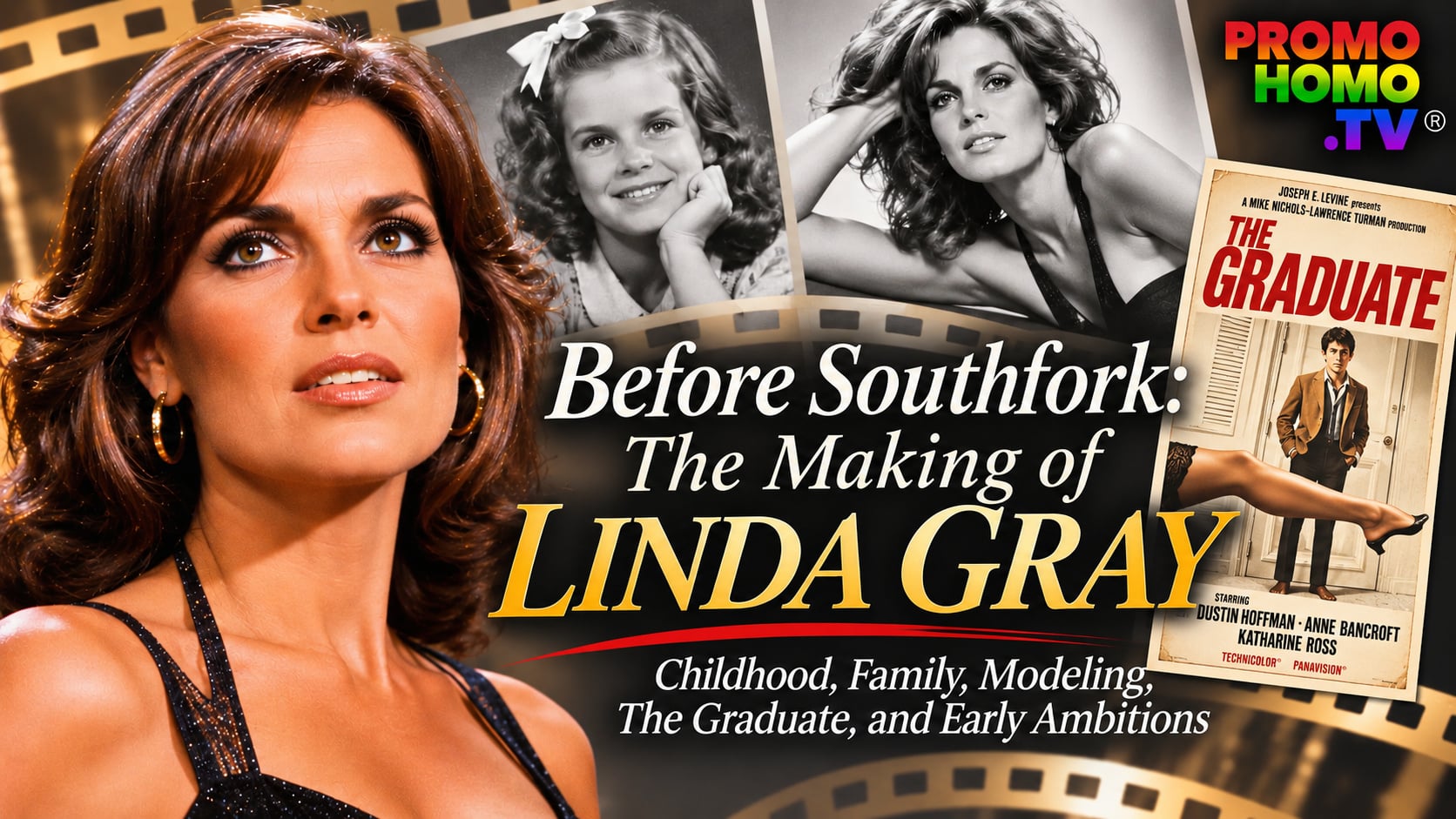
Long before Linda Gray became a household name around the world, she was a California girl growing up practically in Hollywood's backyard. Born on September 12, 1940, in Santa Monica and raised in Culver City, Linda spent her formative years near the very studios where she would eventually build an extraordinary career. But her journey to stardom was anything but predictable.
Her father, Leslie Gray, worked in the watchmaking business, while her mother, Marjorie, had artistic aspirations and experience in ballet and fashion illustration. Raised in a strict Catholic household, Linda attended Notre Dame Academy, an all-girls Catholic school. She dreamed of performing, even as the expectations of her upbringing and the conventions of the era suggested a more traditional path for young women.
One of the most remarkable stories Linda shared with me during our conversation concerned her childhood battle with polio. At approximately five years old, she contracted the disease during an era when polio frightened families throughout America, sometimes resulting in paralysis, permanent disability, and the use of iron lungs to assist patients whose breathing muscles had been compromised.
But Linda's mother was determined that her daughter would recover. As Linda recounted during our evening together, her mother refused to place her in an iron lung. Instead, she spent day after day working with her young daughter, exercising Linda's legs in an extraordinary demonstration of maternal determination and devotion. It was a powerful image: a mother refusing to surrender hope, patiently working with her child through a frightening medical crisis.
The story revealed a dimension of Linda's relationship with her mother that I found especially moving. Their lives together would not be without challenges, but here was a woman whose fierce commitment to her daughter's well-being became part of Linda's earliest understanding of perseverance, physical resilience, and the extraordinary lengths to which a parent might go for a child.
There was another complicated chapter in their relationship. Linda's mother struggled with alcoholism, a condition that affected their family life and would later resonate in remarkable ways with Linda's professional career. Linda has spoken openly about the difficulties of growing up in a household touched by alcohol dependency and about her own efforts to understand the disease and its impact on families.
Yet this was not a story without healing. Later in life, her mother achieved sobriety. The relationship between mother and daughter evolved, and Linda's eventual portrayal of Sue Ellen Ewing, one of television's most famous fictional characters struggling with alcoholism, would provide an unexpected opportunity for understanding and meaningful conversations between them. That extraordinary intersection of art, family history, and recovery deserves its own exploration later in this feature.
One of Linda's most important personal influences was her grandmother, who encouraged her to trust her instincts, embrace independence, travel, and follow her heart. That encouragement became a recurring theme in Linda's life, particularly as she navigated an entertainment industry that frequently attempted to define what women could accomplish and when they could accomplish it.
Linda began modeling as a teenager, eventually appearing in hundreds of television commercials—often estimated at approximately 400. Modeling offered an entry into entertainment, but her deeper ambition was always acting. She wanted opportunities to develop characters, tell stories, and establish herself as a serious performer.
In 1962, she married art director Ed Thrasher. Together they had two children, Jeff and Kehly, and Linda devoted considerable energy to raising her family while continuing to pursue professional opportunities. Her early film work even included an appearance in the 1963 movie Palm Springs Weekend, an especially delightful connection to the desert community she would eventually call home.
Then came one of the most wonderfully unexpected footnotes in Hollywood advertising history. In 1967, Linda was hired for a modeling assignment that paid her just $25. Her legs would become an unforgettable element of the famous movie poster for Mike Nichols' The Graduate, starring Dustin Hoffman and Anne Bancroft. Millions of people became familiar with that image without realizing that the legs associated with Mrs. Robinson belonged to the future Sue Ellen Ewing.
In a remarkable full-circle twist, Linda would eventually portray Mrs. Robinson herself in theatrical productions of The Graduate decades later. The young model whose legs helped advertise the original film ultimately stepped into the character's shoes as an accomplished actress.
Yet perhaps the most significant aspect of Linda's early career was her refusal to accept the idea that her opportunities had an expiration date. While many actresses struggled to find meaningful work as they approached their thirties and forties, Linda was still building toward her greatest professional breakthrough.
She pursued acting with increasing determination while balancing motherhood, marriage, and the expectations imposed upon women of her generation. Along the way, she drew inspiration from formidable performers such as Bette Davis and Katharine Hepburn, whose independence and artistic courage helped establish possibilities for the women who followed them.
What makes Linda's journey particularly inspiring is that her greatest success did not arrive according to Hollywood's conventional timetable. By the time she approached her late thirties, she had experienced the responsibilities of marriage and motherhood, the challenges of establishing a career, and personal experiences that had already begun shaping her understanding of resilience and independence.
And perhaps that is part of what made her eventual success so extraordinary. Linda Gray did not arrive at international stardom as an inexperienced young woman discovering life for the first time. She brought with her decades of experience, determination, vulnerability, strength, and an increasingly confident sense of who she wanted to become. Her breakthrough was just around the corner—but before arriving at Southfork, she would participate in one of television's most unconventional and socially provocative experiments.
Breaking Ground Before Dallas: Norman Lear, All That Glitters, and the Power of Acceptance
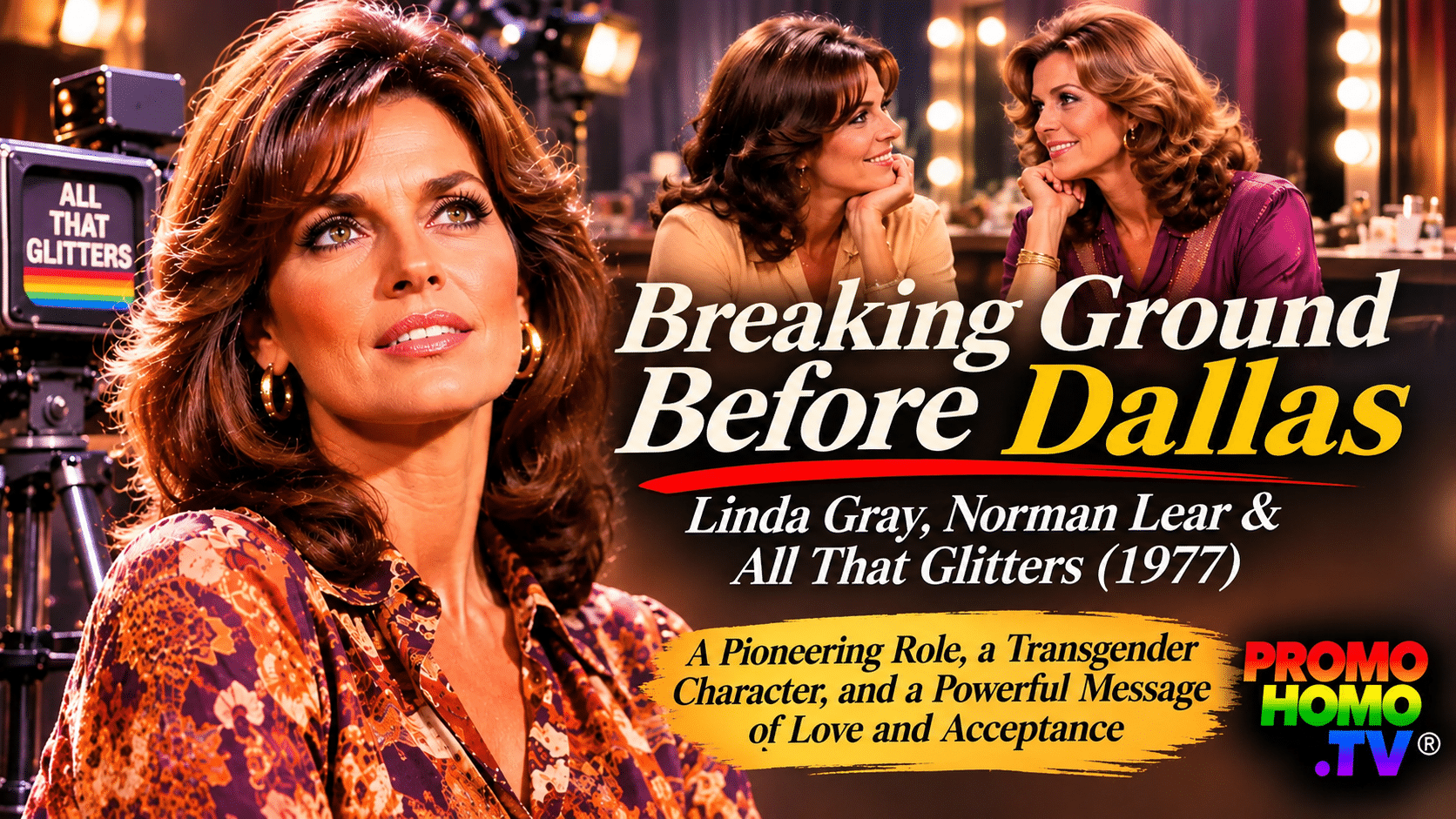
Long before Linda Gray became an international television sensation as Sue Ellen Ewing, she participated in a groundbreaking television experiment that challenged conventional attitudes about gender, power, and identity. The year was 1977, and the creative force behind the project was legendary television producer Norman Lear.
Lear had already transformed American television through programs such as All in the Family, Maude, and Good Times, bringing controversial social issues into America's living rooms through comedy and drama. His syndicated series All That Glitters took that willingness to challenge convention in another fascinating direction.
The premise imagined a society in which traditional gender roles and power structures were reversed. Women dominated the business world and occupied positions of authority, while men experienced many of the expectations and limitations historically imposed upon women. The result was an unconventional satire of gender inequality and the assumptions people make about one another.
Linda portrayed Linda Murkland, a transgender woman, in a recurring role that was extraordinarily unusual for American television in 1977. At the time, the term "transsexual" was commonly used, reflecting the language and understanding of an era when transgender people were rarely represented in mainstream entertainment.
What fascinated me during our conversation was not simply the historical significance of Linda's casting, but the extraordinary care she took in preparing for the role.
Linda shared that she wanted to meet a transgender woman personally. She wasn't interested in approaching the character through stereotypes or assumptions. She wanted to understand the human being she was portraying, including her experiences, feelings, and perspective on the world.
The production arranged for a transgender woman to fly from San Francisco to Los Angeles. Linda and her guest spent considerable time together, talking and getting to know one another. The woman also visited the production and observed Linda working on the set.
Imagine the significance of that encounter in 1977. Transgender people were largely invisible in American popular culture, and public conversations about gender identity were far removed from the understanding and visibility that exist today. Yet Linda was determined to approach the role with curiosity, dignity, and respect.
As Linda reflected on the experience during our evening together, she emphasized a simple but powerful belief: everyone deserves to be loved and accepted. Regardless of identity, background, or the differences that sometimes divide us, she believes in recognizing and honoring our shared humanity.
That sentiment resonated particularly deeply in the inclusive spiritual community where we were gathered. And the impact extended well beyond our conversation onstage.
After the program, a transgender man who had been in the audience approached Linda and shared how deeply moved he was by her story. He also recalled that, during his college years, he and his dormitory buddies had made watching Dallas together a weekly ritual. Decades later, he was standing face-to-face with the woman whose performances had been part of those cherished memories, expressing his appreciation for the compassion and understanding she had demonstrated long before transgender visibility became part of mainstream public discourse.
For me, that encounter beautifully illustrated something central to Linda Gray's legacy. Entertainment has the power to connect people across generations and backgrounds, but the humanity of the performers themselves can leave an equally lasting impression.
Although All That Glitters lasted only approximately 13 weeks, its ambition and willingness to challenge prevailing attitudes deserve recognition. Linda's participation also offers an early glimpse of the compassion that would later become evident through her support of LGBTQ+ communities, HIV/AIDS organizations, women's health initiatives, and other humanitarian causes.
Just one year after All That Glitters, Linda would step into a very different television world. The socially provocative experiment would give way to the wealth, intrigue, and spectacular dysfunction of a Texas oil dynasty. Neither Linda nor the producers could have imagined that Dallas would soon become one of the biggest television phenomena in history—or that Sue Ellen Ewing would make Linda Gray a beloved figure in homes around the world.
Dallas: The Role That Changed Everything
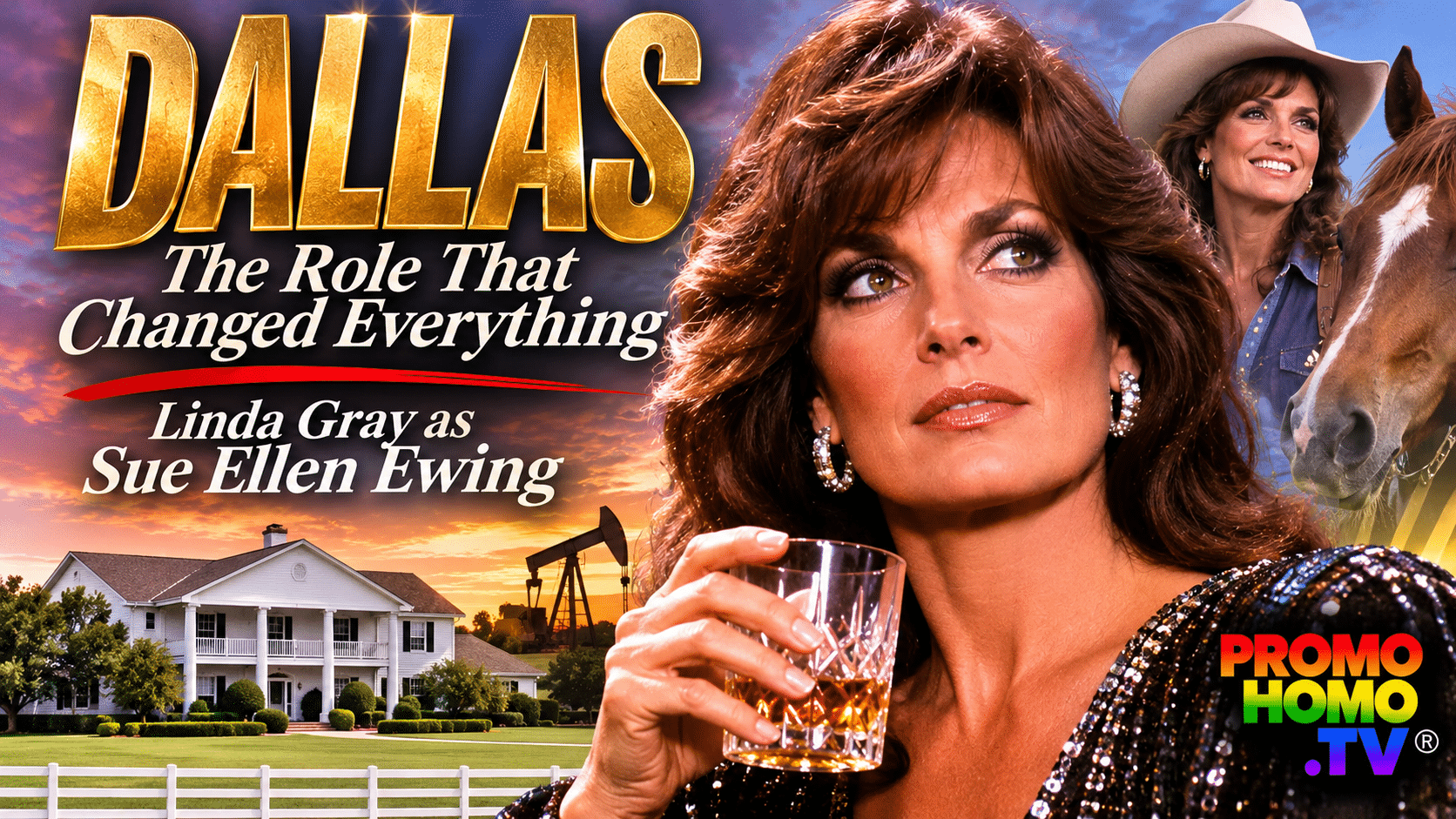
In April 1978, American television audiences were introduced to a wealthy Texas family whose extraordinary dysfunction would soon become a global obsession. The program was Dallas, a five-part CBS miniseries created by David Jacobs and produced by Lorimar Productions. It was initially conceived as a limited television event, but its success persuaded CBS to bring the Ewings back as an ongoing weekly series that September.
What followed was one of the most remarkable success stories in television history. The original Dallas ultimately spanned 14 seasons, including the initial miniseries, and 357 episodes between 1978 and 1991. It helped establish the modern prime-time serialized drama, making continuing storylines, family rivalries, scandalous relationships, and season-ending cliffhangers essential ingredients of television entertainment.
And at the center of this extraordinary phenomenon was Linda Gray, portraying Sue Ellen Ewing, the glamorous, deeply unhappy wife of the unscrupulous J.R. Ewing, played by Larry Hagman.
Remarkably, Sue Ellen was not originally conceived as one of the show's most important characters. Linda's early role was relatively small, but the chemistry between her and Larry Hagman was undeniable. As their scenes together developed, producers recognized that Sue Ellen could become much more than a beautiful woman standing beside her powerful husband.
Sue Ellen evolved into one of television's most psychologically complex female characters. Her alcoholism, troubled marriage, struggles with self-worth, complicated romantic relationships, and eventual determination to become independent gave audiences a woman whose vulnerabilities were as compelling as her strength.
Linda brought enormous humanity to a character who could easily have become a caricature of wealth, privilege, and unhappiness. Her work earned a Primetime Emmy nomination in 1981 and Golden Globe nominations in 1981 and 1982, along with international honors, including Germany's Bambi Award and Italy's Il Gato recognition for her acting.
From Five Episodes to a Worldwide Obsession
The scale of Dallas eventually became almost unimaginable by today's fragmented entertainment standards. The show ranked as America's most-watched television series for three seasons and was seen in countries throughout the world.
Its most famous moment came on November 21, 1980, when an estimated 83 million American viewers tuned in to discover who had shot J.R. Ewing. Worldwide audience estimates approached 360 million. The mystery had become an international cultural event, generating enormous publicity and speculation far beyond the entertainment pages.
It is difficult to convey to contemporary audiences just how dominant a television program could become before streaming services, social media, and hundreds of competing entertainment options. For millions of people, watching Dallas was not simply a weekly pastime. It was a ritual.
Even the show's visual extravagance had its own fascinating behind-the-scenes history. Linda shared an amusing production detail about the jewelry worn during the original miniseries. After jewelry from that production was stolen, the accessories used for the continuing series were different. Over time, Sue Ellen's spectacular jewelry and fashions became essential elements of the character's image, reflecting the conspicuous wealth and glamour associated with the Ewing family.
The real Southfork Ranch, located in Parker, Texas, became a landmark in its own right, attracting fans who wanted to experience the fictional Ewing world for themselves. Originally known as Duncan Acres, the property became internationally recognizable as the home of television's most famous oil dynasty.
A Global Superstar Whose Life Was Grounded in Family
One of the most endearing insights Linda shared during our conversation was the extraordinary contrast between her worldwide celebrity and the way she actually experienced her own life.
While hundreds of millions of television viewers knew her as Sue Ellen Ewing, the magnitude of her fame simply wasn't something Linda spent much time thinking about. Celebrity was certainly a consequence of her extraordinary professional success, but it wasn't the organizing principle of her personal life.
Linda was a homebody, deeply invested in family life and the everyday pleasures and responsibilities of maintaining a home. Rather than living in a constant state of awareness that she was an international superstar, she remained focused on the people and experiences that gave her life meaning.
Beginning in the early 1970s, Linda lived on a California ranch that would remain her home for approximately five decades. Her extended animal family included horses, dogs, cats, chickens, a pig, and a goat. It was a place where she could enjoy the outdoors, raise her children, care for animals, and experience a world far removed from the fictional extravagance of Southfork.
I found that distinction particularly revealing. It wasn't that Linda needed to be told how famous she was or that she was somehow oblivious to the extraordinary popularity of Dallas. Rather, her celebrity existed in the public imagination on a scale that was largely separate from her own experience of daily life.
To the world, she was Sue Ellen Ewing, one of television's most glamorous and recognizable personalities. At home, she was Linda: a mother, a wife during those years, a friend, an animal lover, and a woman whose priorities extended far beyond the entertainment industry.
There is something wonderfully grounding about that contrast. The fame was real, the international adoration was real, and the cultural impact was enormous. But Linda's sense of identity was not dependent upon any of it. Her personal life had its own center of gravity.
Three Television Dynasties Under One Roof
The success of Dallas also helped transform Lorimar into one of the most influential television production companies of the era. Alongside Dallas, Lorimar produced Knots Landing and Falcon Crest, three programs that collectively dominated prime-time television during much of the 1980s.
Knots Landing, created by David Jacobs, was a direct spin-off following Gary and Valene Ewing. Falcon Crest transported audiences into the intrigue and rivalries of California wine country, with Jane Wyman's formidable Angela Channing presiding over another powerful family dynasty.
All three productions operated within the Lorimar television empire, sharing creative and production resources while developing distinct identities. Dallas and Knots Landing used Culver City studio facilities, while Falcon Crest generally filmed at other facilities and on location in California wine country.
CBS even scheduled Falcon Crest immediately after Dallas on Friday nights, creating a powerful prime-time combination. During the 1983–1984 television season, Dallas ranked first nationally, Falcon Crest seventh, and Knots Landing eleventh.
Meanwhile, ABC's Dynasty provided glamorous competition, helping create an extraordinary period when wealthy, dysfunctional television families captivated America.
For me, these productions are especially meaningful because my own professional journey intersected with the Lorimar-Telepictures world decades before Linda and I reunited at the Spiritual Center of the Desert.
Linda Gray's Fight to Become a Director
Perhaps the most inspiring professional story Linda shared during our evening together concerned her determination to direct episodes of Dallas. It is a remarkable account of ambition, sexism, institutional resistance, friendship, and ultimately triumph.
By the mid-1980s, Larry Hagman and Patrick Duffy had both been given opportunities to direct episodes of the enormously successful series. Linda wanted the same opportunity. But rather than simply relying upon her celebrity or demanding a directing assignment as a contractual privilege, she took an extraordinary step: she arranged for her own professional training.
On the recommendation of her acting teacher, Linda sought out Lilyan Chauvin, a respected French-born actress, director, and acting and directing instructor. Chauvin was an accomplished Hollywood professional whose extensive career included work as a performer, filmmaker, educator, and advocate for women pursuing creative careers in the entertainment industry.
Born in Paris, Chauvin eventually established herself in Hollywood, where she taught acting, directing, and the technical aspects of filmmaking. Her professional activities included instruction at the University of Southern California and the University of California, Los Angeles, as well as leadership in the Women in Film Directors Workshop. She was precisely the sort of accomplished professional Linda wanted as a mentor.
Linda undertook approximately a year of private study with Chauvin. She wanted to understand the mechanics of directing, not merely the artistic aspects of working with actors. Her preparation included camera placement, shot selection, framing, technical production requirements, and the organizational responsibilities of directing a television episode.
What impressed me most was Linda's determination that she would not approach the Dallas producers until her teacher believed she was genuinely prepared. She specifically asked Chauvin to evaluate her abilities and tell her when she was ready.
Chauvin took that responsibility seriously. Linda has recalled that her mentor refused to encourage her to seek the assignment prematurely. She insisted that her student understand the essential elements of the director's craft, including the technical details that make the difference between an ambitious performer and a competent professional behind the camera.
Only after extensive preparation did Chauvin give Linda her blessing to approach the producers.
Consider the significance of that decision. At the height of her international celebrity, Linda Gray was willing to become a student again, investing her own time and resources in mastering a profession that Hollywood had made difficult for women to enter. She wasn't asking to be handed an opportunity she couldn't fulfill. She was preparing herself to earn it.
Armed with her training and Chauvin's confidence in her abilities, Linda approached the producers following the eighth season of Dallas. Her request was straightforward: she wanted to direct just one episode during the upcoming production cycle.
She wasn't asking for additional compensation. She wanted the opportunity to expand her creative abilities and demonstrate that she could succeed behind the camera, just as her male colleagues had been allowed to do.
The response was astonishing. The producers refused.
Among their objections was the concern that allowing Linda to direct would encourage other actresses on the series to make similar requests. Linda responded by speaking with Barbara Bel Geddes, Victoria Principal, and Charlene Tilton, asking whether they wanted to direct. None expressed an interest.
Linda returned to the producers with that information, believing she had addressed their concern. But the answer remained no.
When she made directing a condition of her contract negotiations following the eighth season, she was fired.
Think about that for a moment. One of the principal actresses on the world's most successful television series, a woman whose work had contributed enormously to its popularity, had spent a year studying under a respected professional director. Yet she was dismissed because she wanted an opportunity already available to her male colleagues.
Enter Larry Hagman.
Linda told Larry what had happened, and according to the story he subsequently shared with her, he confronted the producers and threatened to leave the program if Linda wasn't reinstated. His support carried tremendous weight because Dallas without J.R. Ewing would have been almost unimaginable.
Linda has recalled the episode with characteristic humor, recognizing both Larry's loyalty and his flair for the dramatic. Whether his threatened departure was entirely serious mattered less than the outcome: Linda returned, and she was finally allowed to direct.
Her triumph was not merely that she had secured a directing assignment. It was that she had refused to accept an arbitrary professional limitation, prepared herself thoroughly, and persisted until she was given the chance to prove what she could do.
But the battle was not yet over.
An Impossible Assignment—and an Extraordinary Victory
Linda recalled that the producers seemed determined to test her abilities by assigning her an exceptionally demanding episode, involving elaborate production requirements, a large cast, complicated scenes, and the aftermath of a masquerade-ball storyline in Martinique.
Rather than giving a first-time director a straightforward assignment, they handed her a production with considerable logistical complexity. Linda believed the difficulty was intentional.
Her first credited episode as director was Just Desserts, which aired March 14, 1986.
The training she had undertaken with Lilyan Chauvin now became invaluable. Linda understood the technical language of directing, the importance of preparation, and the responsibilities involved in coordinating actors, cameras, and production personnel. She was determined that no one would be able to dismiss her work as the indulgence of a television star trying something new.
Linda approached the assignment with confidence and discipline, supported by colleagues who wanted her to succeed. She understood that her performance as a director would speak not only to her own professional future but also to the opportunities available to other women in television.
But she also did something wonderfully strategic.
Having fought so hard for the opportunity, Linda embarked on an enthusiastic publicity campaign, appearing on television talk shows to discuss her struggle to become a director and encourage audiences to watch her episode.
The response was tremendous. Linda has recalled that the episode earned excellent ratings, and the producers were sufficiently impressed to offer her additional directing assignments.
Published episode credits identify five Dallas installments directed by Linda: Just Desserts (1986), Revenge of the Nerd (1987), Brotherly Love (1988), Things Ain't Goin' So Good at Southfork, Again (1988), and The Great Texas Waltz (1989).
Her accomplishments behind the camera became especially meaningful in an industry where female directors remained dramatically underrepresented. She had not simply challenged an unfair limitation. She had demonstrated that the limitation was unjustified.
Linda went on to receive numerous honors throughout her career, including major international acting awards, but the recognition inherent in being trusted to direct additional episodes represented another kind of victory: professional authority earned through persistence and results.
And there is another woman whose contribution to that achievement deserves recognition: Lilyan Chauvin. By sharing her knowledge and insisting that Linda master the craft before seeking the opportunity, Chauvin helped prepare her student for a battle that extended far beyond a single television production.
I found this chapter of Linda's life particularly compelling because it demonstrates that even extraordinary fame doesn't necessarily protect a woman from discrimination. Sometimes the greatest battles are fought not for money or celebrity, but for the opportunity to grow. And sometimes, behind one woman's professional victory, there is another woman who helped make it possible.
Leaving Dallas—and Coming Home Again
Linda departed the original Dallas as a regular cast member in 1989, two seasons before the series concluded. Sue Ellen's departure followed a dramatic storyline in which she finally gained leverage over J.R., created a film exposing his behavior, and left for London with filmmaker Don Lockwood.
By then, Linda had spent more than a decade portraying a woman whose life had been defined by her relationship with an extraordinarily manipulative husband. Sue Ellen's departure represented a measure of independence, both dramatically and symbolically.
She returned for the original series finale in May 1991, appearing in the alternate-reality story that imagined what the Ewing family's lives might have been without J.R.
Yet the story of Sue Ellen Ewing was far from finished.
In 2012, TNT revived Dallas, bringing Linda Gray, Larry Hagman, and Patrick Duffy back to Southfork alongside a new generation of Ewings. The continuation premiered June 13, 2012, attracting approximately 6.86 million viewers and demonstrating that audiences still had enormous affection for the characters.
Linda returned as a more mature and independent Sue Ellen, a woman who had experienced decades of personal transformation. Her character's long-term sobriety, professional aspirations, and complicated relationship with J.R. offered opportunities to revisit familiar themes from an entirely different stage of life.
The reunion was particularly meaningful because it brought Linda, Larry, and Patrick together again. Their friendships had endured long after the original program ended.
Tragically, Larry Hagman died on November 23, 2012, during production of the revival's second season. His death profoundly affected Linda and the extended Dallas family, transforming what had been a joyful professional reunion into another chapter of love, loss, and remembrance.
The TNT series continued for three seasons and 40 episodes before ending in 2014, leaving some storylines unresolved. Nevertheless, it gave a new generation the opportunity to discover the characters who had helped shape television history.
For Linda, returning to Sue Ellen was also an opportunity to revisit a character she had helped transform from a comparatively minor supporting role into one of television's most memorable women.
And for audiences around the world, Sue Ellen remains much more than a glamorous fictional character. She represents vulnerability, survival, changing expectations of women, and the possibility of personal transformation.
The extraordinary legacy of Dallas is inseparable from Linda Gray's talent, determination, and humanity. Yet perhaps the most meaningful part of her contribution lies in something more profound than ratings or celebrity: through Sue Ellen Ewing, Linda helped people recognize aspects of their own struggles, relationships, and possibilities. That influence would become especially powerful when the character's alcoholism intersected with Linda's own family history—and when viewers began telling her that Sue Ellen had helped change their lives.
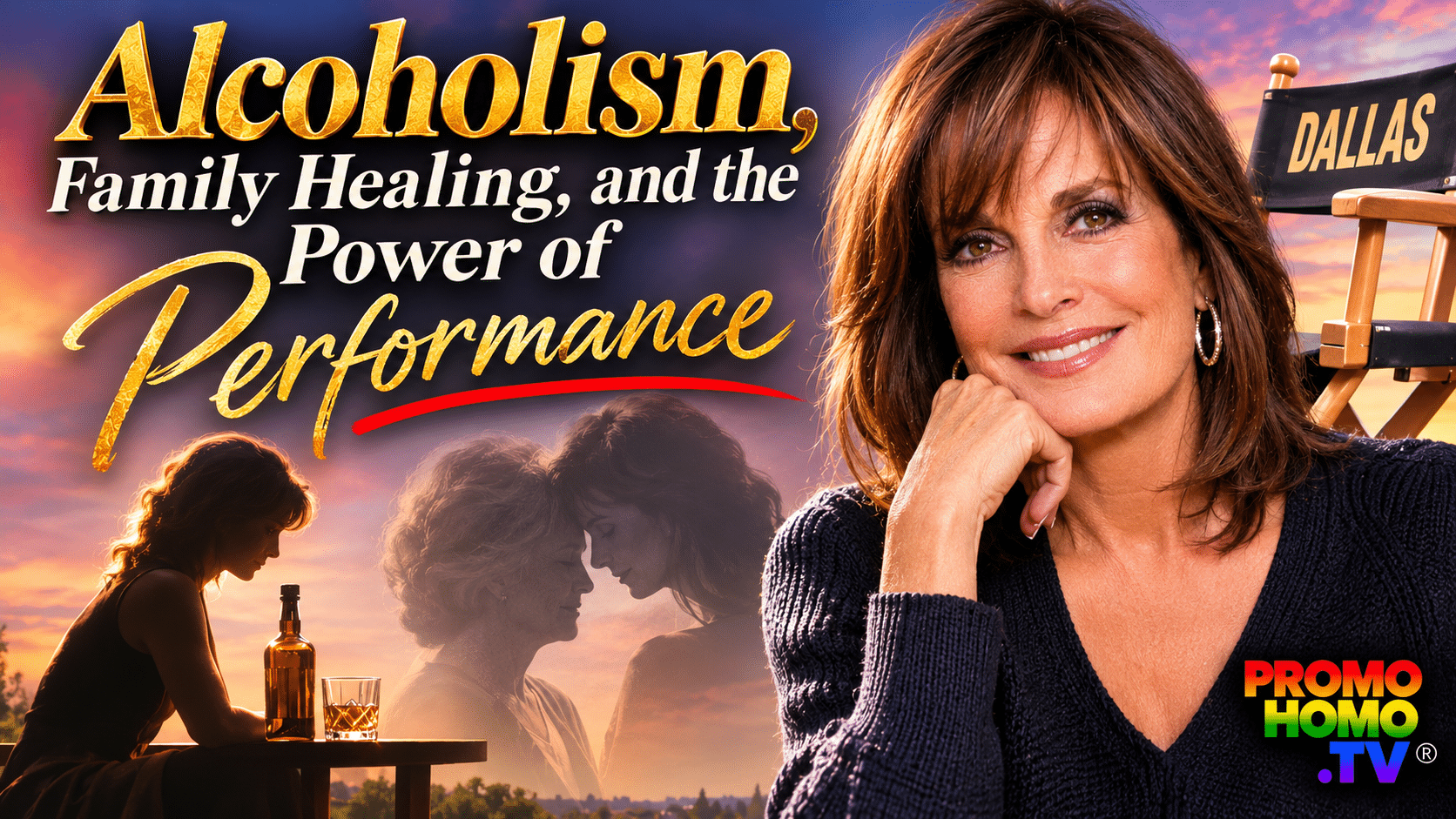
Alcoholism, Family Healing, and the Power of Performance
Among the many reasons Linda Gray's portrayal of Sue Ellen Ewing became so unforgettable was the extraordinary emotional authenticity she brought to the character's struggle with alcoholism. What millions of television viewers experienced as compelling drama had a deeply personal dimension for Linda. Her mother, Marjorie, had struggled with alcoholism, and the role that made Linda an international superstar would also provide an unexpected opportunity for healing within her own family.
During our November 13 conversation at the Spiritual Center of the Desert, we explored the remarkable intersection of Linda's personal history and her professional work. It was one of those moments that reminded me how entertainment can transcend its original purpose, opening conversations that might otherwise never take place and connecting people through experiences they may have spent years struggling to understand.
Growing Up in a Family Where Alcoholism Wasn't Discussed
Linda grew up in an era when alcoholism was frequently treated as a private family matter, something to be concealed rather than openly acknowledged. Drinking was embedded in the social culture of the time, and families often lacked both the language and the resources to understand how addiction affected everyone in the household.
Her mother's drinking affected their relationship, creating a distance that Linda would understand more fully as she grew older. Yet Linda has always been careful to distinguish her mother's experience from Sue Ellen's fictional behavior. Marjorie was not the flamboyant, dramatically intoxicated woman television audiences came to know. In a 2015 interview, Linda described her mother as someone whose drinking left her emotionally absent at times, rather than behaving like Sue Ellen.
That distinction is important. Alcoholism does not look the same in every individual, and its consequences are not limited to the person who drinks. Families may experience uncertainty, loneliness, anxiety, or difficulty communicating about situations they cannot control. These effects can persist long after childhood.
As Linda grew older, she sought a better understanding of alcoholism and its impact on families. In a September 28, 2015, interview with Michael Fairman TV, she publicly confirmed that she had attended Al-Anon meetings.
Reflecting on how she came to understand alcoholism as a disease, Linda explained: "I went to Al-Anon meetings to find out … how do I deal with this when I got a little older?"
Her comment is revealing because it places her participation in Al-Anon within her own efforts to understand and respond to her mother's alcoholism. She was not describing an abstract interest in addiction. She was speaking about something she had experienced within her family and wanted to understand more deeply.
Linda also recognized how thoroughly the drinking culture of her childhood had normalized alcohol consumption. She recalled a time when household wet bars, cocktails, and routine social drinking were commonplace, while the distinction between ordinary drinking and alcoholism was often minimized.
The knowledge she gained as an adult helped her see her mother's struggle in a new light. Yet understanding the nature of a disease does not automatically resolve the emotional distance it may have created between family members. Sometimes another pathway to communication must emerge.
When Sue Ellen's Scripts Became a Bridge Between Mother and Daughter
Then came Dallas.
As Sue Ellen Ewing's alcoholism became an increasingly important part of the television series, Linda discovered that the scripts offered a remarkable opportunity to communicate with her mother. Rather than beginning with a painful conversation about their own family history, she could invite Marjorie to consider the experiences of a fictional woman.
Linda shared early Dallas scripts with her mother, drawing her attention to Sue Ellen's drinking and the emotional consequences unfolding within the Ewing family. The fictional storyline provided a way to approach a subject that had been difficult to discuss directly.
In her 2015 conversation with Michael Fairman, Linda confirmed the importance of that experience. Fairman recalled the account in her memoir of sharing the scripts with her mother and how this became a turning point in their relationship, including her mother's acknowledgment of her drinking problem.
Linda described the experience as a powerful moment. She felt there was something almost divinely guided about being cast in a role that allowed her to confront a subject so deeply connected to her family history.
But she was equally emphatic about one distinction: Sue Ellen was not a recreation of Marjorie. Linda had no desire to imitate her mother. She wanted to construct a completely different woman, with her own motivations, relationships, weaknesses, and contradictions.
Nevertheless, the scripts became an unexpected bridge between mother and daughter. Through the experiences of a fictional character, they were able to approach an uncomfortable truth that had affected their relationship for years.
Marjorie eventually found sobriety, an important chapter in the family's journey toward healing. For Linda, the experience also reinforced her understanding that the impact of a performance can extend far beyond the circumstances imagined by writers and producers.
I find that extraordinary: a fictional character, brought to life through scripts, rehearsals, cameras, and performances, helped create a pathway toward understanding between a mother and daughter who had struggled to communicate about one of the most painful aspects of their lives.
Creating Sue Ellen Without Romanticizing Alcoholism
Linda's approach to portraying Sue Ellen was informed by an actor's commitment to understanding the character rather than relying upon obvious dramatic effects.
Sue Ellen was a wealthy Texas woman whose identity was wrapped in appearances, social status, and the expectations of the Ewing family. Her clothes were immaculate, her makeup carefully applied, and her public presentation generally controlled, even when her private life was falling apart.
In her 2015 interview, Linda explained that she disliked exaggerated portrayals of intoxication. She believed Sue Ellen's social position and personality demanded something more nuanced than simply stumbling through scenes or behaving in an obviously disheveled fashion.
That attention to detail became one of the hallmarks of her performance. Sue Ellen's alcoholism was often conveyed through changes in her behavior, judgment, speech, and emotional control, rather than through the most obvious conventions of playing a drunk character.
Linda also researched the lifestyle of affluent Dallas women during the series' early years, observing how they dressed, carried themselves, selected accessories, and interacted socially. She incorporated those observations into Sue Ellen's personality and gradually refined the character's Texas accent and mannerisms.
What emerged was a woman whose outward sophistication frequently concealed profound emotional distress.
Over the years, Sue Ellen's alcoholism became inseparable from the power struggles and emotional cruelty of her marriage to J.R. Ewing. Her drinking sometimes offered a temporary escape from humiliation, insecurity, and loneliness, even as it intensified the consequences she faced.
Some of Sue Ellen's most memorable scenes stripped away the glamour entirely, exposing her vulnerability in circumstances far removed from Southfork's elegant interiors. Linda particularly enjoyed the creative challenge of scenes in which Sue Ellen reached an extreme low point and encountered a homeless woman in an alley.
For Linda, the acting challenge was not to make Sue Ellen's alcoholism attractive or sensational. It was to portray the character as a complicated human being whose problems could not be reduced to a single diagnosis or personal failure.
Sue Ellen remained intelligent, proud, vulnerable, angry, self-deceiving, and capable of growth. She was simultaneously a woman of extraordinary privilege and a person struggling with a disease that wealth could not cure.
The Letters That Revealed the Power of Television
As Dallas became an international phenomenon, Linda began discovering how personally viewers connected with Sue Ellen's story.
She received letters from people who recognized their own lives in the character's struggles. Some were living with alcoholism themselves; others had experienced the effects of a loved one's drinking. Sue Ellen's pain, setbacks, and efforts to regain control of her life resonated with audiences far beyond the fictional world of the Ewings.
Some viewers shared that witnessing Sue Ellen's struggle encouraged them to acknowledge problems in their own lives and seek help. Others found meaning in seeing an illness that had often been surrounded by secrecy and shame addressed in a hugely popular television program.
For Linda, those responses helped demonstrate that a performance could have consequences no ratings report or industry award could adequately measure.
The character was fictional. The emotional response was not.
I have always believed that entertainment possesses an extraordinary capacity to make people feel less isolated in their experiences. A viewer may be unable to discuss a painful family situation openly, yet recognize that situation when it appears on a television screen. Sometimes that recognition becomes the beginning of a conversation, a request for help, or a willingness to imagine that life can be different.
Sue Ellen Ewing gave millions of people a common reference point for considering an illness that families had too often been encouraged to hide.
Through Linda's performance, viewers were invited to care about a woman whose struggles might otherwise have been dismissed or stigmatized. They could witness the consequences of her drinking without losing sight of her worth as a human being.
Recovery, Relapse, and the Return to Dallas
The subject of alcoholism remained important to Sue Ellen's story when Linda returned for the TNT continuation of Dallas in 2012.
By then, Sue Ellen had experienced many years of sobriety and had developed an independence that would have seemed almost unimaginable during the darkest years of her marriage. But the writers eventually introduced a relapse following the death of J.R. Ewing.
Linda has publicly described her initial reaction to discovering a script in which Sue Ellen poured herself a drink after J.R.'s death. She was upset. Having spent so many years portraying the character's struggles and eventual recovery, Linda was reluctant to revisit the drinking storyline.
Rather than simply accepting the development, she sought guidance from friends who were members of Alcoholics Anonymous. She wanted to understand whether such a relapse could be believable after years of sobriety and whether the circumstances surrounding J.R.'s death provided an appropriate emotional context.
Her friends helped her recognize that profound grief could indeed create vulnerability, particularly when the person who had died occupied such a complicated and emotionally significant place in the individual's life.
Linda ultimately accepted the storyline, which unfolded amid the dramatic circumstances surrounding a fire at Southfork.
The decision was revealing. Even decades after first playing Sue Ellen, Linda was still concerned with representing the character's alcoholism thoughtfully. She was not interested in revisiting addiction merely for sensational dramatic effect. She wanted the behavior to make sense within the character's emotional experience.
The storyline also reflected an important reality: recovery is not always linear. Long periods of sobriety do not eliminate vulnerability, and a relapse does not erase the progress a person has made. Sue Ellen's renewed struggle offered another opportunity to explore the continuing challenges of living with alcoholism.
The Healing Power of Being Seen
What moves me most about this part of Linda Gray's life is how many different forms of understanding and healing emerged from a single television role.
For Linda, Sue Ellen provided an unexpected opportunity to address her mother's alcoholism and create a more honest relationship with her. For viewers, the character became someone whose experiences reflected their own pain and struggles. For television audiences more broadly, her story helped bring a difficult and frequently stigmatized disease into public conversation.
And for Linda as an actress, the role demonstrated the profound difference between simply entertaining an audience and reaching people in ways that might change their lives.
The story also illuminates something essential about Linda herself. She did not allow the difficulties of her childhood to define her solely through pain. She sought understanding, pursued healing, and discovered that some of the experiences that had challenged her could also deepen her capacity for compassion.
That compassion would become increasingly visible beyond the world of Dallas, through the friendships she formed, the people she supported, and the humanitarian causes to which she devoted her time and influence.
As our November 13 conversation continued, another dimension of Linda Gray's extraordinary life emerged: the remarkable Hollywood legends who became her friends, mentors, colleagues, and fellow advocates. Some of those relationships were filled with hilarious, almost unbelievable stories. Others would become enduring bonds of love and shared purpose. Together, they reveal a woman whose most meaningful connections were never limited to the cameras, the red carpets, or the extraordinary fame that surrounded her.
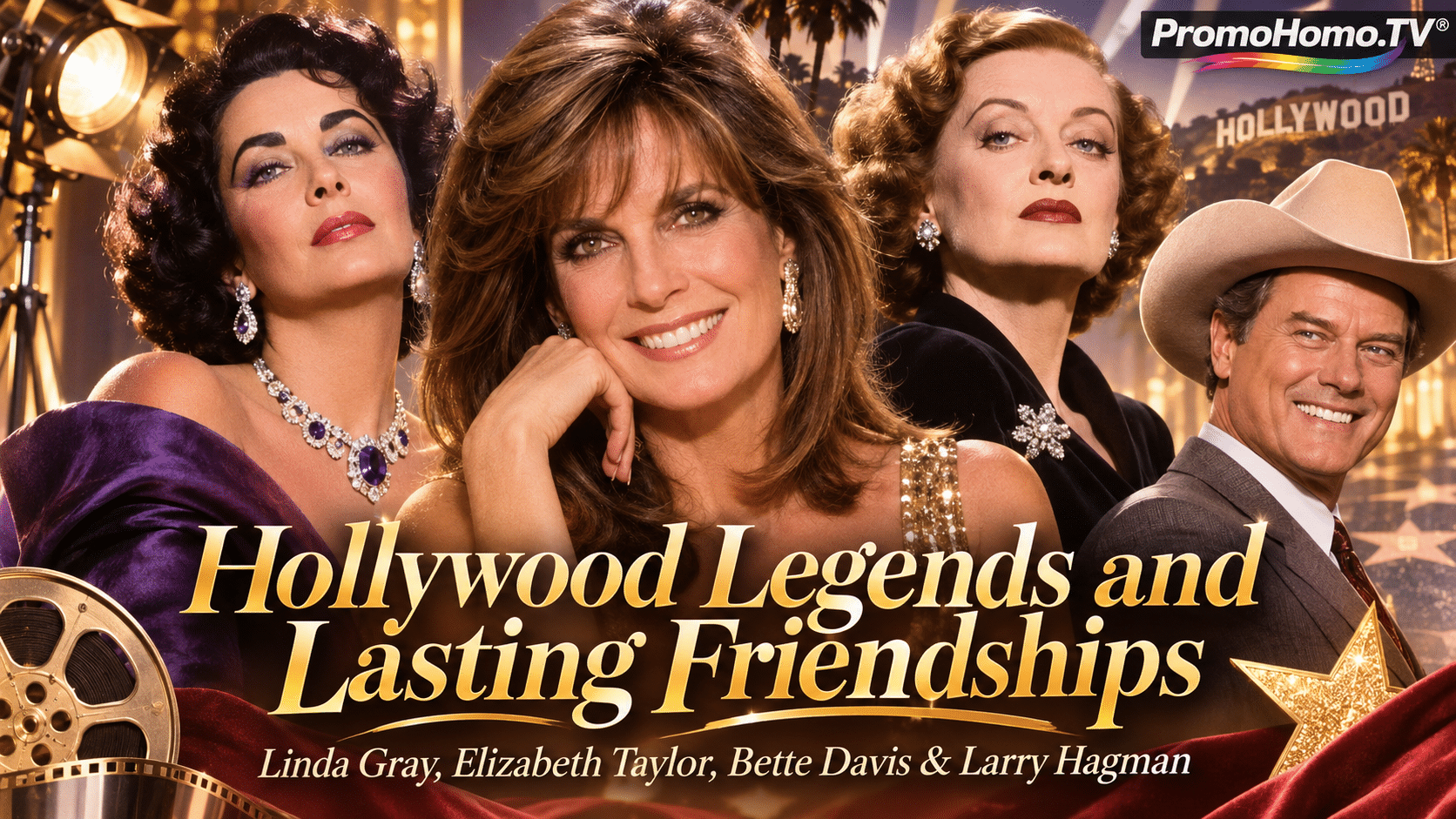
Hollywood Legends and Lasting Friendships
One of the great pleasures of my November 13 conversation with Linda Gray was exploring the extraordinary people whose lives have intersected with hers. Over a career spanning more than six decades, Linda has worked alongside some of the most recognizable personalities in entertainment history. Yet what makes her recollections so compelling is not the celebrity of the people involved, but the affection, humor, admiration, and humanity that emerge from her stories.
Imagine finding yourself entertaining Elizabeth Taylor in your own home, unexpectedly receiving a telephone call from Bette Davis, or developing a friendship with Larry Hagman that would last more than three decades. For most people, these would be almost unimaginable encounters. For Linda, they became chapters in a life filled with extraordinary relationships.
What I especially appreciate about Linda is that she approaches these memories with the same sense of humor and genuine warmth that she brings to our own conversations. She doesn't speak about Hollywood legends as untouchable figures on pedestals. She remembers them as fascinating, complicated, funny, occasionally outrageous human beings.
Elizabeth Taylor: A Legendary Friendship Begins with a Beauty Disaster
Elizabeth Taylor was already one of the most celebrated women in the world when she entered Linda Gray's life. A two-time Academy Award winner, international screen icon, and larger-than-life personality, Taylor had achieved the kind of fame that transcended Hollywood itself.
Her career encompassed such landmark productions as National Velvet, A Place in the Sun, Giant, Cat on a Hot Tin Roof, BUtterfield 8, and Who's Afraid of Virginia Woolf? Her extraordinary beauty, spectacular jewelry, high-profile marriages, and unmistakable violet eyes became part of the mythology of twentieth-century celebrity.
But Linda's first encounter with Elizabeth was memorable for a reason having absolutely nothing to do with glamour.
As Linda recounted in a 2026 interview, a mutual friend who worked as an interior decorator telephoned to announce that Elizabeth Taylor would be stopping by Linda's home for lunch on the way to Santa Barbara.
Linda had approximately 45 minutes to prepare.
Imagine the scene. Elizabeth Taylor is coming to lunch. There is food to prepare, a home to organize, and virtually no time to transform oneself into a Hollywood hostess worthy of the occasion.
Linda decided to concentrate on the meal rather than her appearance. With time running out, she hurried into the bathroom, intending to apply a little facial moisturizer and lipstick before greeting her legendary guest.
The luncheon began, and everything appeared to be going reasonably well. But during the meal, the interior decorator, Waldo, began making discreet gestures toward Linda's face, indicating that something was amiss near her mouth.
Linda assumed she had a crumb or some other trace of lunch on her skin. She politely dabbed at her face with a napkin and continued the conversation.
A few minutes later, Waldo gestured again, this time toward the other side of her face. Linda repeated the maneuver, still uncertain what had attracted his attention.
Elizabeth Taylor, meanwhile, said nothing.
After the guests departed for Santa Barbara, Linda cleaned up the dishes and eventually returned to her bathroom. One glance in the mirror revealed the horrifying truth.
She had not applied moisturizer at all. She had accidentally covered her face with a peel-off beauty mask, which had been drying and gradually peeling away throughout lunch.
There she had been, entertaining one of the most glamorous women in cinematic history, while her face was literally peeling in front of her guests.
It is a wonderfully human story, precisely because it punctures the illusion of effortless Hollywood perfection. Elizabeth Taylor herself had graciously refrained from embarrassing her hostess, even as the situation became increasingly absurd.
And the encounter did not end there. Linda and Elizabeth developed a genuine friendship, marked by an irreverent sense of humor and considerable mutual affection.
Linda has recalled that she affectionately referred to Elizabeth as a bawdy broad, while Elizabeth delighted in teasing Linda about her famously long legs, using language decidedly more colorful than anything a conventional Hollywood publicist might have approved.
I love that image: two extraordinarily glamorous women laughing together, exchanging outrageous nicknames, and finding friendship beyond the expectations that accompanied their celebrity.
Elizabeth's legacy extended far beyond her screen performances. She would become one of the most influential public figures in the fight against HIV/AIDS, using her international fame to raise money, challenge stigma, and demand greater compassion for people living with the disease.
That commitment to humanitarian service also forms an important part of Linda's own story, one we will explore in greater depth as this feature continues.
Bette Davis: When an Acting Idol Calls Your Kitchen
If Elizabeth Taylor represented the spectacular glamour of Hollywood, Bette Davis embodied something equally important to Linda Gray: the uncompromising artistry of a great actress.
Davis was one of the most formidable performers of Hollywood's Golden Age, celebrated for her intelligence, emotional intensity, distinctive voice, and willingness to portray difficult, unconventional women. Her performances in Jezebel, Dark Victory, The Letter, Now, Voyager, All About Eve, and What Ever Happened to Baby Jane? established her as an enduring cinematic legend.
Linda had admired Davis long before becoming famous herself. In fact, she considered the legendary actress a kind of imaginary acting mentor, studying her performances and admiring the emotional honesty she brought to the screen.
As Linda explained in a remarkable 2015 interview with Dallas Decoder, she regarded Davis as one of the most authentic actresses she had ever seen. Davis represented the kind of fearless commitment to character that Linda hoped to emulate in her own work.
Then, while Linda was starring in Dallas, an opportunity arose involving a proposed remake of Now, Voyager, Davis's beloved 1942 romantic drama.
The original film, directed by Irving Rapper and also starring Paul Henreid and Claude Rains, told the story of Charlotte Vale, a sheltered and emotionally oppressed woman who undergoes a profound personal transformation and discovers a new sense of independence.
Linda was approached about playing the role Davis had made famous. Her immediate reaction was disbelief. How could she possibly follow Bette Davis in one of her most iconic performances?
She initially resisted the idea.
Then came a telephone call she would never forget.
Linda was in her kitchen feeding her cats. They were demanding their dinner, and she had a can opener in her hand when the telephone rang.
On the other end was an unmistakable voice introducing herself as Bette Davis.
Imagine Linda's astonishment. The woman whose performances she had admired and studied for years was suddenly speaking to her while she stood in her kitchen, surrounded by impatient cats.
Davis announced that her assistant would arrange a meeting. Linda agreed, although she later admitted that the experience of encountering her idol was almost overwhelming.
When they finally met, Davis was gracious and engaging. She brought Linda to a window overlooking the water, and during their conversation she revealed something Linda found almost impossible to comprehend.
Bette Davis watched Dallas.
Not only did she watch it, she had developed strong opinions about the actors and their performances.
For Linda, the revelation was simultaneously thrilling and terrifying. Here was the actress she had admired as a model of professional excellence, telling her that she had been watching her work on television.
Davis proceeded to offer observations about the Dallas cast. Linda later described being impressed by how perceptive Davis was, how much she could discern about performers simply by watching them work.
The entire encounter had an almost surreal quality: one generation's great actress evaluating the work of a woman who had grown up admiring her, and that younger actress struggling to absorb the reality that her idol was now speaking to her as a fellow professional.
What makes the story especially meaningful is the respect Linda retained for Davis's artistic standards. Her admiration was never merely about celebrity. It was about the craft of acting and the courage required to create characters who were flawed, difficult, vulnerable, and profoundly human.
Those qualities were central to Davis's greatness, and they were precisely the qualities Linda had spent years bringing to Sue Ellen Ewing.
The proposed Now, Voyager remake did not become a Linda Gray film, but the meeting left her with something arguably more valuable: a personal encounter with a woman whose artistry had influenced her throughout her career.
Larry Hagman: The Great Love Affair of Friendship
No account of Linda Gray's Hollywood friendships would be complete without Larry Hagman.
For millions of television viewers, Larry and Linda were J.R. and Sue Ellen Ewing, one of the most famously combative marriages in entertainment history. Their scenes were filled with manipulation, betrayal, outrageous insults, and emotional warfare.
The reality behind the cameras could hardly have been more different.
Larry and Linda became exceptionally close friends, sharing a professional and personal bond that lasted approximately 35 years. Their chemistry was immediate, and both recognized that their ability to respond spontaneously to one another gave their scenes a distinctive energy.
Linda had already admired Larry from his work as Major Anthony Nelson on the beloved sitcom I Dream of Jeannie. When they first encountered each other at the Dallas script reading, she was delighted and a little starstruck to discover that she would be playing his wife.
Their early experiences working together in Texas helped establish the friendship. Larry owned a converted bread truck outfitted with comfortable chairs, a bed, and a hammock. He would gather his colleagues inside, play music, and take them on excursions around Texas as they became acquainted with the world they were portraying.
It was hardly the conventional image of sophisticated television stars preparing for a major network production. But it perfectly reflected Larry's eccentricity and his gift for making ordinary experiences memorable.
Larry also delighted in practical jokes. Linda has recalled that he sometimes ate onions or peanut butter before filming kissing scenes, knowing that she would have to maintain her composure while the cameras rolled.
There was also a wonderful atmosphere of mischief around the family dinner table at Southfork. Larry and Patrick Duffy amused themselves by launching dinner rolls across the table using their forks, while Barbara Bel Geddes, playing the dignified Miss Ellie, attempted to restore order.
Linda recalled those moments with affection because they illustrated how much fun the performers had together. Their fictional relationships might have been tortured, but the working environment was frequently filled with laughter.
Larry's generosity extended far beyond the set.
During a difficult period following Linda's separation from her husband, she moved into a rented home in Malibu. Larry appeared the following morning with Champagne and a machine that filled the air with bubbles. He then took her around the community on his motor scooter, introducing her to local merchants and helping make an unfamiliar place feel like home.
It is difficult to imagine a more delightfully Larry Hagman response to a friend's distress. Rather than offering solemn speeches, he arrived with bubbles, Champagne, transportation, and a determination to make Linda smile.
The story was recorded in a memorable 2001 joint interview with Larry and Linda, in which they spoke about the enduring friendship that existed behind the fictional hostility of J.R. and Sue Ellen.
And, as we explored in the preceding Dallas section, Larry's loyalty became professionally consequential when Linda was fired after insisting upon the opportunity to direct. His intervention helped secure her reinstatement and the chance to prove herself behind the camera.
That history reveals the depth of their relationship. Larry wasn't simply a charming colleague who enjoyed making people laugh. When Linda faced a serious professional injustice, he was prepared to use his considerable influence on her behalf.
The friendship continued long after the original Dallas ended. Larry, Linda, and Patrick Duffy remained close, eventually reuniting for the TNT continuation of the series in 2012.
Larry's death on November 23, 2012, during production of the revival brought tremendous sadness to everyone who loved him. For Linda, the loss was particularly personal.
In public statements following his death, she described Larry as her best friend of 35 years, recalling his generosity, creativity, humor, and extraordinary ability to bring joy into a room.
Several years later, Linda shared an especially moving reflection: she still spoke to Larry, finding comfort in the belief that the spirit of someone we love does not simply disappear when that person dies.
Their bond remains one of the most touching aspects of the Dallas legacy. The world knew them as adversaries on screen. In real life, they shared laughter, generosity, professional respect, and enduring love.
The Humanity Behind Hollywood Royalty
What connects these three remarkable relationships is not simply that Elizabeth Taylor, Bette Davis, and Larry Hagman were famous. Each represented a different dimension of Linda Gray's experience in Hollywood.
Elizabeth brought irreverent humor, extraordinary glamour, friendship, and an example of celebrity used in service of humanitarian causes. Bette represented artistic excellence, professional courage, and the astonishing experience of meeting someone whose work had shaped Linda's own aspirations. Larry embodied the enduring joy of creative partnership and the rare gift of a friendship that could withstand the pressures of extraordinary fame.
And perhaps that is why Linda's stories resonate so strongly with me. In my own decades working in entertainment and interviewing celebrities, I have always been interested in discovering the human being beyond the public image.
The most memorable encounters are not necessarily those in which someone recites a list of accomplishments. They are the moments when people reveal their humor, their insecurities, their generosity, their gratitude, and the relationships that have shaped their lives.
Linda's recollections of lunch with Elizabeth Taylor, a telephone call from Bette Davis, and Larry Hagman's wonderfully eccentric gestures of friendship reveal something that no celebrity biography or awards list can fully capture: the deeply personal experiences that exist behind Hollywood history.
These were not simply encounters with legendary performers. They were opportunities for connection, learning, laughter, and enduring affection.
There is also a larger significance to these friendships. The same entertainment industry that created international superstars was undergoing profound cultural and social changes throughout the decades when Linda's career flourished. By the early 1980s, even as Dallas was captivating audiences around the world, a devastating new health crisis was beginning to affect countless lives, including those of people working throughout Hollywood's creative community.
That crisis would challenge the entertainment industry's conscience and transform the meaning of celebrity advocacy. For Linda Gray and other prominent figures who believed that fame carried responsibilities beyond the screen, it would become another opportunity to demonstrate that compassion is measured not only by what we feel, but also by what we are willing to do.
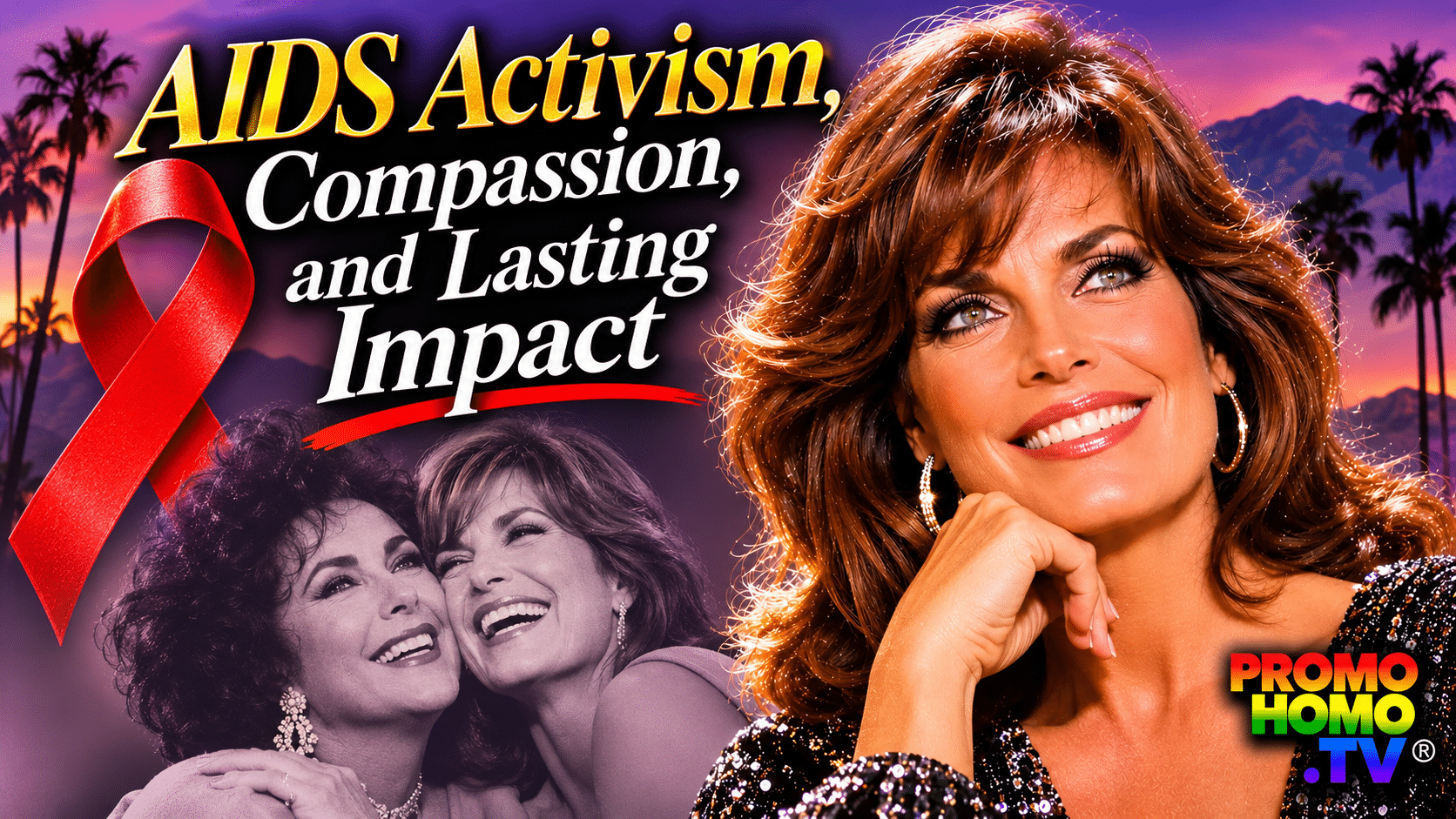
AIDS Activism, Compassion, and Lasting Impact
There is an extraordinary historical intersection between Linda Gray's ascent to international superstardom and one of the most devastating public health crises of the twentieth century. As Dallas captivated television audiences around the world, HIV/AIDS was emerging as an epidemic that would forever change the entertainment industry, the LGBTQ+ community, and millions of families across the globe.
The contrast is almost impossible to comprehend. On television, audiences were fascinated by the fictional excesses of the Ewing dynasty: spectacular wealth, extravagant parties, extraordinary scandals, and the glamorous world of Sue Ellen Ewing. Behind the scenes in Hollywood, however, another story was unfolding, one involving fear, discrimination, extraordinary suffering, and eventually a remarkable movement of activism, compassion, and resistance.
For Linda Gray, whose friendships and professional relationships extended throughout the entertainment industry, the epidemic became an opportunity to put her visibility and influence in service of people who urgently needed understanding and support.
Two Histories Unfolding Simultaneously
When Dallas premiered in April 1978, AIDS had not yet been identified as a distinct medical syndrome. By 1981, when the television series was reaching the height of its extraordinary popularity, federal health authorities were reporting unusual clusters of serious illnesses among previously healthy young men.
The early reports would eventually be recognized as evidence of a rapidly expanding epidemic. The name Acquired Immune Deficiency Syndrome, or AIDS, came into use in 1982, and researchers subsequently identified HIV as the virus responsible.
The medical crisis was compounded by a devastating social crisis. Because the earliest widely publicized American cases disproportionately involved gay and bisexual men, misinformation and prejudice flourished. People living with HIV/AIDS faced discrimination in employment, housing, healthcare, and even within their own families.
In Hollywood, the epidemic affected performers, writers, directors, designers, dancers, production personnel, and countless others whose work had helped create the entertainment that audiences loved.
The entertainment industry depended upon the talents of LGBTQ+ people, yet many of those same individuals confronted extraordinary stigma when the epidemic began claiming lives.
By the middle of the decade, the contrast between Hollywood's celebrated public image and the suffering occurring within its creative community had become impossible to ignore.
It was in this atmosphere that some of the entertainment industry's most prominent personalities began using their fame to challenge fear, raise money, and demand a more compassionate response.
Elizabeth Taylor: When Celebrity Became a Call to Action
Among the most influential figures in this transformation was Elizabeth Taylor, whose friendship with Linda we explored in the preceding section.
Taylor had already achieved virtually every distinction Hollywood could bestow. But during the AIDS crisis, she discovered another purpose for the international visibility that had accompanied her throughout her life.
In 1985, Taylor helped organize and host the first major Commitment to Life fundraising dinner benefiting AIDS Project Los Angeles, commonly known as APLA. At a time when many prominent personalities were reluctant to associate themselves publicly with AIDS, Taylor insisted upon direct participation.
The event, held September 19, 1985, raised approximately $1.3 million for an organization working to provide urgently needed services to people affected by the epidemic.
Her efforts were not without resistance. Taylor later recalled encountering extraordinary reluctance from people who feared that even attending an AIDS benefit could damage their reputations.
She refused to accept that fear as a reason for inaction.
The illness and subsequent death of her longtime friend Rock Hudson in 1985 brought the tragedy into even sharper focus. Hudson, one of Hollywood's most popular leading men, became the first internationally prominent film star to disclose an AIDS diagnosis. His death that October helped bring unprecedented public attention to the epidemic.
Taylor became a founding international chair of amfAR, the Foundation for AIDS Research, and in 1991 established the Elizabeth Taylor AIDS Foundation to support organizations providing care, prevention, education, and advocacy.
She visited people affected by AIDS, confronted public officials, raised extraordinary sums of money, and consistently challenged the discrimination surrounding the disease.
Her work demonstrated that celebrity could become something far more consequential than an instrument of publicity. It could help change public attitudes, mobilize resources, and give visibility to people who had been marginalized or abandoned.
The history of this pioneering work is documented by The Elizabeth Taylor AIDS Foundation, amfAR, and APLA Health.
Linda Gray: Standing with the Community
Linda Gray's own involvement in HIV/AIDS advocacy is part of a broader history of humanitarian engagement that has accompanied her professional life for decades.
Her support was not limited to expressions of sympathy. She participated in fundraising efforts and lent her celebrity to organizations working directly with people affected by HIV/AIDS.
Among the organizations she supported was AIDS Project Los Angeles. Archival photographs document Linda attending the organization's Commitment to Life fundraising gala, and she has been publicly identified among its celebrity supporters.
Linda also served as an honorary chairperson for an event associated with the Design Industries Foundation Fighting AIDS, known as DIFFA, in Dallas, Texas. Founded in 1984, DIFFA mobilized the design and creative industries to raise funds for HIV/AIDS education, prevention, treatment, and direct services.
That Dallas connection seems especially appropriate. The city whose name had become synonymous with Linda's most famous television role was also home to a community of advocates working to address the devastating consequences of the epidemic.
In 1994, Linda was photographed attending the Two-Steppin' for the Cure country-western dinner and dance celebrating Elizabeth Taylor's 62nd birthday, a fundraising event benefiting amfAR.
The occasion brought together two important dimensions of Linda's life: her friendship with Elizabeth and her longstanding willingness to support HIV/AIDS causes.
Decades later, Linda remained involved. In November 2019, she was among the attendees at a Beverly Hills fashion and cocktail reception hosted by Joan Collins to benefit the Elizabeth Taylor AIDS Foundation.
This continuity matters. Her support was not confined to the years when AIDS dominated the headlines. It remained part of her public humanitarian engagement long after advances in treatment had transformed the lives of many people living with HIV.
Everyone Deserves Love and Acceptance
One of the clearest public expressions of Linda's philosophy appeared in a November 10, 2015, interview with journalist Jerry Nunn for Windy City Times, an LGBTQ+ publication.
The interview explored both Linda's pioneering portrayal of a transgender woman in Norman Lear's All That Glitters and her history of AIDS activism.
When Nunn acknowledged her extensive work supporting AIDS causes, Linda confirmed her involvement and explained that she believed people were here to do the best they could for one another.
Her answer reflected a philosophy that seems remarkably consistent across the decades: "Everyone should be accepted and loved for who they are."
That simple statement is particularly significant when considered against the history of HIV/AIDS discrimination. During the epidemic's darkest years, many people living with the disease were treated not merely as patients in need of medical care, but as individuals whose lives were somehow less deserving of compassion.
Linda's emphasis upon acceptance offers a direct counterpoint to that attitude.
The complete interview, "Linda Gray Talks AIDS Activism and Playing a Trans Role," provides a particularly meaningful public record of her longstanding connection with the LGBTQ+ community.
Her commitment to equality and acceptance also helps explain why her appearance at the Spiritual Center of the Desert felt so appropriate. It is a community built around spiritual exploration, personal growth, and the dignity of every individual, values that resonate with the compassion Linda has expressed throughout her career.
Recognition for a Lifetime of Compassion
Linda's humanitarian commitment has also received recognition from organizations serving LGBTQ+ communities and people affected by HIV/AIDS.
In 2014, Different Roads Home, a North Carolina nonprofit serving people affected by HIV/AIDS and members of the LGBTQ+ community, selected Linda for a humanitarian award.
In an interview published by QNotes, the organization's executive director, Dale Pierce, explained that the selection committee had reviewed Linda's record of involvement with AIDS charities in Los Angeles, her work as a United Nations Goodwill Ambassador, and her other charitable activities.
The recognition acknowledged not simply an isolated appearance at a fundraiser, but an extended pattern of involvement in causes serving people who were vulnerable, marginalized, or in need of assistance.
Linda expressed gratitude for the honor and described how fortunate she felt to have opportunities to travel, learn from others, and participate in humanitarian work.
Her experiences as a United Nations Goodwill Ambassador would eventually take her to communities far removed from Hollywood, where she listened to women discussing the importance of clean water, safe childbirth, education, and basic human dignity.
Those experiences deserve their own attention, and we will explore them more fully in the next section.
The 2014 recognition and Linda's reflections are documented in QNotes' interview concerning her humanitarian award.
Why This History Still Matters
For me, the history of HIV/AIDS activism is not simply a chapter in Hollywood's past. It is part of the continuing struggle for human dignity, equality, scientific progress, and access to compassionate healthcare.
The epidemic transformed the LGBTQ+ community, inspiring extraordinary networks of mutual support, political organizing, direct action, and humanitarian service. Organizations such as AIDS Project Los Angeles emerged in response to urgent unmet needs, providing practical assistance and advocacy at a time when many institutions were slow to act.
Medical advances have since transformed HIV from a frequently fatal diagnosis into a manageable chronic condition for many people who have access to effective treatment. But the work of combating stigma, expanding access to care, supporting prevention, and honoring those lost to the epidemic continues.
Hollywood's participation in this history is complicated. There were moments of extraordinary courage, but also years of fear, prejudice, silence, and institutional indifference. The individuals who chose to speak publicly and put their reputations behind the cause helped shift the conversation.
Elizabeth Taylor became one of the defining figures of that transformation. Linda Gray, through her continued support of AIDS organizations, fundraising efforts, and public affirmation of LGBTQ+ dignity, contributed to the larger community of advocates who recognized that visibility could be used for something greater than personal acclaim.
I find it meaningful that a woman who achieved worldwide fame portraying Sue Ellen Ewing also understood the importance of standing beside people whose experiences might otherwise remain unseen or misunderstood.
There is an important distinction between being celebrated by millions of people and choosing to use that attention in service of others. One is a consequence of professional success. The other reflects personal values.
Linda's story is enriched by both.
And HIV/AIDS advocacy represents only one dimension of her remarkable humanitarian journey. From global initiatives supporting women's health to organizations assisting people facing poverty, hunger, illness, and discrimination, Linda Gray's life beyond the screen reveals a sustained commitment to a simple but powerful principle: our lives become more meaningful when we use whatever resources and influence we possess to help improve the lives of others.

A Life of Humanitarian Service
The extraordinary public recognition Linda Gray achieved through Dallas provided something few people ever experience: the ability to attract international attention simply by showing up. Yet one of the most impressive chapters of Linda's life concerns what she chose to do with that attention when the cameras were no longer focused on Southfork Ranch.
Her humanitarian work has taken her far beyond Hollywood premieres, television studios, and celebrity fundraisers. She has traveled internationally, met with women and families facing enormous challenges, supported organizations dedicated to human dignity, and used her influence to promote access to reproductive healthcare, education, and opportunities for women.
During our November 13 conversation at the Spiritual Center of the Desert, Linda's commitment to treating people with kindness and respect emerged as a consistent theme. That philosophy also provides a meaningful way to understand her life beyond entertainment.
For Linda, humanitarian service has never needed to be separated from everyday compassion. The same belief that everyone deserves love and acceptance has informed her involvement with causes addressing some of the world's most difficult social and medical challenges.
From Hollywood to the United Nations
One of Linda's most significant humanitarian appointments came through the United Nations Population Fund, commonly known as UNFPA, the United Nations agency dedicated to sexual and reproductive health and the rights and well-being of women, adolescents, and families.
In January 1998, the United Nations formally announced that Linda would serve as a UNFPA Goodwill Ambassador and lead an international advocacy initiative known as Face to Face.
The campaign was organized in cooperation with the International Planned Parenthood Federation and European nongovernmental organizations. Its central objectives were to increase awareness of women's reproductive health needs, advance gender equality, support women's empowerment, and encourage governments to maintain or expand assistance for health programs in developing countries.
The announcement was not merely ceremonial. Linda had already undertaken a fact-finding visit to Nicaragua, where she witnessed firsthand how access to healthcare and reliable information could transform the lives of women and families.
The United Nations announcement also acknowledged Linda's prior involvement in women's and environmental issues, recognizing that her appointment reflected interests and commitments extending beyond the public image of Sue Ellen Ewing.
Dr. Nafis Sadik, then Executive Director of UNFPA and a pioneering international advocate for women's reproductive rights, welcomed Linda's appointment, describing her as an accomplished actress and a deeply caring advocate capable of communicating the importance of these issues to audiences around the world.
The official announcement, "Linda Gray to Head Global Advocacy Campaign," published January 20, 1998, remains an important historical record of her work.
I find this chapter of Linda's life particularly meaningful because it illustrates the difference between being famous and choosing to make that fame useful. Her international recognition opened doors, but she still had to decide to walk through them, listen to unfamiliar perspectives, and become involved with issues far removed from the entertainment business.
Nicaragua: Listening Before Speaking
In 1997, Linda traveled to Nicaragua to learn about programs addressing reproductive health, family planning, and adolescent pregnancy.
Her itinerary included an adolescent health center in Managua, a healthcare worker training facility in Matagalpa, and visits with people receiving family planning services in rural mountain communities and urban neighborhoods.
These encounters introduced Linda to women and families whose circumstances differed dramatically from her own. Some lived in communities where access to comprehensive healthcare was limited. Others faced cultural, economic, or educational barriers affecting their ability to make informed decisions about pregnancy and family life.
Rather than approaching these visits as a celebrity arriving with ready-made solutions, Linda emphasized the importance of listening.
In the United Nations' 1998 announcement, she explained that she did not consider herself a population expert and did not claim to possess all the answers. Her responsibility, as she understood it, was to meet people, hear their concerns, understand their circumstances, and help bring attention to possibilities for improving their lives.
She spoke about the fears, frustrations, desires, hopes, and dreams shared by people across different cultures. Her experience reinforced a belief that, despite differences in nationality, income, and circumstances, human beings possess fundamental emotional needs in common.
That outlook is consistent with so much of what Linda expressed during our evening together. She doesn't need to know everything about another person's life to recognize their humanity. Her instinct is to approach people with curiosity, respect, and an open heart.
Linda observed that family planning programs were making a difference in communities where women had historically given birth to very large numbers of children. She noted examples of families becoming smaller as education, medical services, and reproductive healthcare became more accessible.
She also recognized the importance of addressing adolescent pregnancy through effective health programs and adequate resources.
These were not abstract policy discussions. They concerned young women making decisions about their futures, mothers seeking medical care, families balancing economic challenges, and healthcare professionals working to meet community needs.
The United Nations subsequently documented that Linda had filmed a television program in Nicaragua addressing adolescent pregnancy, created public service announcements for UNFPA, and participated in public advocacy activities designed to increase awareness and support for international family planning.
Her work illustrates one of the most valuable contributions a prominent public figure can make: directing attention toward people whose experiences may otherwise receive little international recognition.
Face to Face: Making Women's Lives Visible
The Face to Face campaign reflected an important idea: people are more likely to understand complex international issues when they encounter the individuals affected by them.
Statistics can describe maternal health challenges, limited access to reproductive healthcare, or the consequences of discrimination. But individual stories reveal what those challenges mean in everyday life.
The campaign sought to connect audiences in developed countries with the experiences of women facing barriers to healthcare, education, and reproductive choice in other parts of the world.
Its priorities included supporting access to maternal healthcare, expanding family planning services, promoting gender equality, and confronting harmful practices such as female genital mutilation.
These were substantial objectives, often complicated by political disagreement, cultural traditions, limited financial resources, and longstanding inequalities in the treatment of women.
Linda's role was to help make these issues visible and understandable, particularly to audiences who might otherwise have little direct knowledge of the circumstances involved.
She was joined in the broader campaign by other prominent international advocates, including model and activist Waris Dirie, whose work focused on ending female genital mutilation, and Japanese actress Keiko Kishi, another UNFPA Goodwill Ambassador.
Together, these advocates represented an international effort to use public recognition in support of women's fundamental rights.
The campaign also challenged a familiar assumption about celebrity activism: that a well-known person must become an expert in every aspect of an issue before becoming useful.
Linda understood that the expertise belonged to healthcare professionals, educators, community organizations, policymakers, and the women whose lives were directly affected. Her contribution was to help bring their experiences and concerns to a larger audience.
That distinction deserves recognition. Effective humanitarian service does not necessarily begin with having all the answers. Sometimes it begins with the willingness to ask, listen, learn, and amplify the voices of people who understand a problem from firsthand experience.
Taking Advocacy to Washington
Linda's role as a Goodwill Ambassador also included advocacy directed toward government leaders and policymakers.
United Nations records document her participation in events at the White House and in Congress, where she helped build support for international family planning programs and environmental issues.
Her work involved more than attending public events. She addressed legislators and encouraged support for reproductive healthcare programs throughout the world.
The United Nations Population Fund's 2000 annual report specifically records Linda addressing United States legislators to urge support for international reproductive health initiatives.
This aspect of her humanitarian career is especially interesting because it required her to move beyond the relatively familiar environment of entertainment-related fundraising and into the arena of international public policy.
Reproductive healthcare and family planning have long been politically sensitive subjects. Supporting international programs can involve difficult conversations about government funding, cultural practices, healthcare access, and the rights of women to make decisions about their own bodies and families.
Linda's participation helped communicate why those issues deserved attention from people who might know her primarily as a television actress.
Her presence could attract an audience. Her willingness to engage with the substance of the issues gave that attention a humanitarian purpose.
An International Campaign with Measurable Results
The Face to Face initiative developed into a substantial international advocacy effort, employing television documentaries, exhibitions, print campaigns, public appearances, educational activities, and partnerships with nongovernmental organizations.
United Nations reporting from the early 2000s documented the campaign's expansion and its increasing reach across Europe and other regions.
According to a 2001 United Nations report, the campaign's partners produced 13 television documentaries, four traveling exhibitions, numerous advertising and media initiatives, and educational activities addressing reproductive health and women's rights.
The campaign was formalized as an independent nonprofit initiative in 1999, reflecting the breadth of its partnerships and its continuing work.
These activities demonstrate that the undertaking was much more than a ceremonial association between the United Nations and prominent entertainers. It was a coordinated advocacy program designed to reach broad audiences, increase public awareness, and encourage material support for women's health.
Linda remained associated with the effort as it developed. In 2003, she participated in a gala in Brussels celebrating the grassroots fundraising campaign known as 34 Million Friends of UNFPA.
That campaign encouraged individuals to contribute directly to the agency's work in support of women's health and reproductive rights. The United Nations reported that the initiative had raised nearly $2 million by the time of the Brussels celebration.
Linda appeared alongside Belgian television personality and fellow Goodwill Ambassador Goedele Liekens, reinforcing the international scope of the effort.
The event is documented in the UNFPA 2003 Annual Report.
For a woman whose career had already brought her international recognition, these activities represented another kind of professional accomplishment: helping encourage people from different nations and cultures to participate in shared humanitarian objectives.
The Broader Meaning of Compassion
Although her United Nations service represents one of the most formally documented chapters of Linda's humanitarian work, it is consistent with a broader pattern of involvement in causes benefiting people facing significant challenges.
As we've already explored, her support for HIV/AIDS organizations extended across decades, encompassing fundraising events, public advocacy, and participation in efforts to provide care and reduce stigma.
Her concern for women's rights, reproductive healthcare, and access to medical services reflects a similarly long-standing commitment to improving people's quality of life.
These causes may initially appear quite different. HIV/AIDS advocacy, reproductive healthcare, women's empowerment, environmental concerns, and support for people facing discrimination each involve distinct circumstances and policy challenges.
But they share a fundamental concern: the belief that every person deserves dignity, opportunity, and compassionate treatment.
What stands out to me is Linda's willingness to move beyond sympathy into participation. It is one thing to express concern about injustice or suffering. It is another to lend one's time, public visibility, and personal effort to organizations working on solutions.
Linda's career provided her with extraordinary access to influential people and institutions. Her humanitarian work demonstrates that she recognized the potential of using that access in service of others.
And while international recognition may open doors, it cannot substitute for genuine curiosity about the human beings on the other side of those doors.
The image of Linda traveling through Nicaragua, visiting community health programs and listening to women explain the circumstances of their lives, offers a compelling counterpoint to her fictional existence at Southfork.
On television, Sue Ellen Ewing inhabited a world in which enormous financial resources could purchase virtually every conceivable luxury, yet could not guarantee emotional happiness.
In her humanitarian travels, Linda encountered people for whom access to basic healthcare, accurate information, and reproductive choice could make an enormous difference in their futures.
Both experiences, in very different ways, illuminate the importance of human dignity and the limitations of judging people's lives by their outward circumstances.
A Legacy Measured in Human Connections
The enduring value of Linda Gray's humanitarian service cannot be measured simply by counting public appearances, fundraising events, or organizational affiliations.
Those accomplishments are important, but the larger significance lies in the people whose circumstances were brought to public attention, the organizations that received support, and the conversations that helped challenge assumptions about health, equality, and human rights.
Her work with the United Nations is particularly meaningful because it reflects an understanding that listening is itself an essential part of advocacy.
A woman in Nicaragua describing the challenges of raising a family, a young person seeking reproductive healthcare, a community health worker struggling to meet local needs, or an advocate working to challenge harmful traditions may seem far removed from the glamorous world of a Hollywood television star.
Yet Linda's involvement helped connect those very different worlds.
Throughout our evening together, I was reminded that the qualities making Linda such a compelling public personality are also deeply connected to the way she approaches other people: curiosity, humor, empathy, a willingness to listen, and an instinctive respect for individual dignity.
These qualities have been evident in her friendships, her performances, her advocacy, and the choices she has made throughout her life.
They also help explain why the audience responded to her with such warmth. People were not merely listening to a famous actress recount the highlights of an extraordinary career. They were encountering a woman whose experiences had given her a broad and compassionate understanding of the human condition.
And yet, as meaningful as Linda's public accomplishments are, they do not tell the entire story of her strength or her capacity for compassion.
During the audience question-and-answer portion of our November 13 program, an apparently simple question about travel and future adventures led Linda to share something deeply personal and unexpected. It changed the emotional direction of the evening and opened a remarkable conversation about love, loss, resilience, and the ways we carry the people we cherish with us. That moment deserves to be experienced as it unfolded.

Surviving the Impossible with Purpose
There are moments during a live interview when something completely unexpected happens, transforming an already memorable conversation into an experience that neither the interviewer nor the audience could have anticipated. One such moment occurred during my November 13 evening with Linda Gray at the Spiritual Center of the Desert.
We had spent much of our time exploring Linda's extraordinary career, friendships, humanitarian work, and philosophy of life. The evening had been filled with laughter, fascinating revelations, and the warmth of two people enjoying a meaningful conversation before an appreciative audience.
But during the audience question-and-answer portion of the program, the conversation took an unexpected and profoundly moving turn.
An audience member asked what seemed to be a straightforward question about Linda's adventures and future plans: "So you walked the El Camino? Is there anything else on your bucket list?"
The question referred to Linda's journey along the Camino de Santiago, the historic pilgrimage route across northern Spain that has attracted travelers and spiritual seekers for more than a thousand years.
It might easily have prompted an amusing story about the physical demands of long-distance walking, the beautiful Spanish countryside, or the adventures of a Hollywood actress taking on an entirely new challenge.
Instead, Linda chose to reveal the deeply personal reason she had undertaken the pilgrimage.
She had made the journey for her late son, Jeff. She had taken his ashes with her.
In that instant, the emotional direction of the evening changed.
What had begun as a question about a bucket-list adventure became a deeply personal reflection on the loss of a child, the enduring bond between mother and son, and the extraordinary ways people seek meaning in the aftermath of unimaginable grief.
A Journey Made for Jeff
Linda's son, Jeff Thrasher, was a talented television producer and director whose career included documentary and unscripted programming. He was also a cherished son, brother, father, and creative professional whose life was filled with imagination, humor, and love.
In 2020, Jeff died from leukemia at the age of 56.
For Linda, his death was devastating in ways that no professional accomplishment, public recognition, or lifetime of extraordinary experiences could possibly diminish.
The loss of a child reverses the order in which parents ordinarily expect life to unfold. The person whose first moments you witnessed, whose childhood you helped shape, and whose future you anticipated is suddenly gone. Yet the relationship does not end with death. Love remains, along with memories, sorrow, and the continuing presence of someone who has permanently shaped your life.
Linda has discussed this experience in public interviews, including a September 2026 conversation with HELLO! magazine, in which she reflected upon the enduring heartbreak of Jeff's death and the bond between a mother and the child she brought into the world.
She has never suggested that grief is something one simply completes, masters, or leaves behind. Rather, she has described learning how to continue living while carrying her son's memory with her.
Her pilgrimage along the Camino de Santiago became a deeply meaningful expression of that continuing relationship.
The Camino is not simply a hiking trail. It is a centuries-old network of pilgrimage routes leading toward Santiago de Compostela in northwestern Spain, traditionally associated with the shrine of Saint James. Over time, it has also become a destination for people seeking reflection, healing, personal transformation, and spiritual renewal, whether or not they identify with a particular religious tradition.
Walking the pilgrimage requires commitment, endurance, and a willingness to spend long periods with one's thoughts. The physical journey can become inseparable from a more intimate emotional or spiritual experience.
In a 2023 interview, Linda described preparing for the challenge by training and hiking before traveling to Spain. She recalled being confronted with a demanding first day of walking and discovering a powerful sense of accomplishment as she pushed herself beyond what she had previously imagined doing.
But there was a dimension to that journey far more important than the physical challenge.
As Linda revealed to our audience, she had brought Jeff's ashes with her. The pilgrimage was something she was doing for him, and in a deeply personal sense, with him.
The image is profoundly moving: a mother walking a historic path, carrying the remains of the son she loved, honoring his memory through a journey that demanded both physical perseverance and emotional courage.
There is no need to impose a particular interpretation upon what that experience meant to Linda. Its significance lies in the choice she made to share it with us, and in the love that made the journey meaningful to her.
An Unexpected Opening in Our Conversation
As the person conducting the interview, I had been aware of the devastating losses Linda had experienced. I had also made a conscious decision not to ask her directly to revisit those experiences before a live audience.
My intention was to celebrate her extraordinary life, her work, her friendships, and the wisdom she has gained along the way. I wanted our conversation to be expansive and meaningful, but I did not believe that required asking her to discuss the deaths of people she loved.
Then the audience member asked about her pilgrimage, and Linda made her own decision to share the story.
Her answer created an opening that had not existed a moment earlier. Because Linda herself had introduced Jeff's death into the conversation, I could acknowledge other important aspects of her life connected to loss, resilience, and humanitarian service.
The resulting exchange was not something I had scripted or planned. It emerged naturally from Linda's willingness to speak about a profoundly personal experience.
For me, this is one of the most meaningful qualities of a live interview. The strongest moments are not always the ones anticipated by the person asking the questions. Sometimes they arise because a guest feels comfortable enough to follow a thought somewhere unexpected.
Betty: A Sister Whose Loss Changed Linda's Life
Among the experiences I was then able to acknowledge was the death of Linda's sister, Betty, from breast cancer in 1989.
The sisters had shared the history of their childhood, including the challenges that accompanied their mother's alcoholism and the experiences that helped shape Linda's understanding of family and resilience.
Betty's death profoundly affected Linda's outlook on life.
In a 2008 interview with Palm Springs Life, Linda identified her sister's death as a life-changing experience. The loss brought a new awareness of life's fragility and inspired her to appreciate each day more consciously.
It is a perspective that appears repeatedly throughout Linda's public reflections. She understands that life can change without warning, and she has chosen to respond by looking for reasons to appreciate the present rather than allowing fear of future loss to dictate her choices.
Of course, appreciation and gratitude do not eliminate grief. Nor does a commitment to living fully mean that a person has somehow transcended the pain of losing someone they love.
Betty's death also gave Linda a personal understanding of cancer's devastating consequences long before she would experience the loss of her son.
And cancer would become an important thread connecting some of Linda's most enduring friendships with her humanitarian commitments.
Farrah Fawcett: Friendship, Cancer, and a Legacy of Advocacy
Another deeply meaningful relationship in Linda's life was her friendship with Farrah Fawcett, the internationally beloved actress whose beauty, personality, and performances made her one of the defining cultural figures of the 1970s.
Farrah became an international sensation through Charlie's Angels, but her career extended well beyond the famous television series. She earned critical acclaim for challenging dramatic performances in productions such as The Burning Bed, Extremities, and Small Sacrifices.
Like Linda, Farrah was much more than the public image that first made her famous.
In 2006, Farrah was diagnosed with anal cancer. Her subsequent treatment and struggle against the disease became the subject of the deeply personal documentary Farrah's Story, which aired on NBC in May 2009.
The documentary offered audiences an unusually intimate view of the physical and emotional realities of cancer, revealing the determination of a woman who had spent decades being celebrated primarily for her beauty and glamour.
Farrah died on June 25, 2009, at the age of 62.
Her determination to make a difference for people facing cancer survived her death through the Farrah Fawcett Foundation, established during her lifetime to support cancer research, prevention, and assistance for people affected by the disease.
Linda's long friendship with Farrah, combined with the cancer-related losses within her own family, gave the foundation's mission profound personal relevance.
In 2022, Linda received the Farrah Fawcett Foundation's Angel Award at the organization's inaugural Tex-Mex Fiesta fundraiser in Dallas, an event honoring Farrah's Texas roots while raising support for cancer-related programs.
The recognition honored Linda's charitable involvement and her commitment to supporting people affected by cancer.
Two years later, Linda returned as a co-chair of the 2024 Tex-Mex Fiesta alongside Alana Stewart, Farrah's close friend and the foundation's president.
Speaking at the event, Linda described how profoundly the death of her son had affected her and emphasized the urgency of finding better ways to prevent and treat the disease.
Her involvement was documented in coverage of the 2024 Farrah Fawcett Foundation fundraiser, which also reflected upon her friendship with Farrah and the loss of Jeff.
This is where the personal and humanitarian dimensions of Linda's life intersect with such clarity.
She has lost people she loved to cancer. She has experienced the devastation of watching a family confront the disease. And she has chosen to lend her name, time, and energy to organizations dedicated to helping others facing similar circumstances.
No charitable contribution can reverse the loss of a loved one. But it can help create opportunities for research, treatment, education, and support that may improve the lives of people whose own stories are still unfolding.
Beginning Again in the Desert
Jeff's death also prompted one of the most significant changes in Linda's personal life.
For approximately 50 years, she had lived on a three-acre California ranch, surrounded by the animals and familiar routines that had made the property such an important part of her identity.
It was the home where she had raised her family, where she had returned after long days working on Dallas, and where so many of her most cherished memories had accumulated.
But after Jeff's death, the familiar surroundings also carried the painful reminders of his absence.
Linda's daughter, Kehly Sloane, encouraged her to consider a change of environment. The suggestion was not about forgetting the past, but about making room for a different way of living after a devastating loss.
Linda eventually sold the ranch and moved to the Palm Springs area, embracing the desert as the setting for a new chapter.
She has discussed this transition publicly, including in her September 2026 HELLO! interview, describing how the combination of her son's death, the passage of time, and the increasing responsibility of maintaining the property prompted her to reconsider where and how she wanted to live.
Leaving a home filled with decades of family history can be difficult under any circumstances. Doing so after the death of a child requires confronting a life that has changed in ways no parent would ever choose.
Yet Linda approached the transition as an opportunity to begin again, carrying her memories with her rather than believing she had to remain physically surrounded by them.
Her life in the desert has also allowed her to enjoy time with her daughter and grandsons, Ryder and Jack, whose visits bring energy, laughter, and the familiar activities of family life.
Linda has spoken with particular delight about her role as a grandmother, including the special birthday connection she shares with Ryder, who was born on her birthday.
The image of an internationally celebrated actress happily accommodating the activities and schedules of her grandsons offers another reminder of the priorities that have always grounded Linda's life.
What Linda Shared with Me in the Greenroom
After the event, Linda and I had an opportunity to speak privately in the greenroom about what had unfolded onstage.
I told her that I had deliberately chosen not to ask directly about the deaths of her family members. I knew those experiences were part of her history, and I understood their importance, but I did not want to place her in the position of having to revisit them before an audience simply because I was conducting a public interview.
Linda then shared something that made the evening's unexpected turn even more meaningful.
She had not planned to speak about those losses either.
But when the audience member asked about walking the Camino de Santiago and what else might be on her bucket list, Linda decided in that moment to explain why she had undertaken the journey.
It was her decision to share the story.
I found that private exchange profoundly meaningful, both personally and professionally.
As an interviewer, I believe there is a distinction between creating a comfortable space for genuine conversation and attempting to manufacture an emotional moment. The latter can easily become intrusive, particularly when discussing grief, illness, or experiences that belong to the most private dimensions of someone's life.
What happened that evening was different.
An audience member asked an innocent question. Linda followed her own thoughts and chose to reveal the deeply personal significance of her pilgrimage. I then responded to the opening she had created, allowing the conversation to acknowledge the other losses and meaningful commitments that had shaped her life.
Neither of us had planned for that particular exchange.
Perhaps that is why it felt so authentic.
Our conversation in the greenroom reinforced my appreciation for the trust that can develop between two people when neither feels compelled to force an experience into a predetermined narrative.
Linda was not being asked to turn her grief into entertainment. She was choosing to share something meaningful about a person she loved.
Far from Finished: Carrying Love Forward
There would be something deeply incomplete about telling this part of Linda Gray's story solely in terms of the losses she has endured.
Her life is not simply a record of extraordinary professional achievements followed by personal tragedies. It remains an unfolding journey, filled with relationships, curiosity, opportunities, and possibilities.
At 86, Linda continues to reject the notion that advancing age should dictate the boundaries of her life. She remains interested in new experiences, adventures, relationships, creative opportunities, and meaningful contributions.
She feels she is far from finished. There is still so much she wants to do.
That perspective gives the audience member's original bucket-list question an unexpectedly powerful significance. It opened the door to a journey undertaken in memory of her son, but it also invited us to consider the journeys that still lie ahead.
I do not believe resilience means overcoming grief so completely that it no longer matters. Nor does finding purpose require transforming every painful experience into an uplifting lesson.
Sometimes resilience is simply the decision to keep participating in life while acknowledging that someone important is missing.
It can mean making room for laughter without diminishing sorrow, welcoming new relationships without replacing old ones, and pursuing meaningful experiences while carrying the memories of people who helped shape us.
Linda's journey to Spain, her move to the desert, her devotion to family, and her continuing charitable work are different expressions of that willingness to remain engaged with life.
What moves me most about our unexpected exchange is not simply that Linda has endured profound losses, but that she has continued to make room for compassion, purpose, curiosity, and love.
The audience member who asked about the Camino de Santiago could not have known where the question would lead. Neither could I. Yet Linda's willingness to answer from the heart created one of the most meaningful moments of an evening already filled with extraordinary stories.
I will remember that exchange not because Linda's grief defines her, but because she allowed us to glimpse the enduring presence of love within it.
Her capacity to embrace life's possibilities while honoring all she has experienced leads naturally to another essential dimension of her life: the spiritual philosophy that sustains her and the wisdom she expresses so memorably in the title of her memoir, The Road to Happiness Is Always Under Construction.

Spirituality and The Road to Happiness
One of the most appealing aspects of Linda Gray's philosophy is her understanding that happiness is not a permanent destination. It is something we continue discovering and creating as our lives unfold, through gratitude, conscious choices, meaningful relationships, and a willingness to embrace change.
That philosophy is beautifully expressed in the title of her 2015 memoir, The Road to Happiness Is Always Under Construction. It also resonates with the teachings of the Spiritual Center of the Desert in Palm Desert, California, a spiritual community Linda and I both attend.
A Spiritual Community Rooted in Love and Inclusion
Located at 45630 Portola Avenue in Palm Desert, the Spiritual Center of the Desert is a welcoming spiritual community whose philosophy draws upon New Thought principles and the Science of Mind teachings developed by Dr. Ernest Holmes.
Its mission, "Changing lives one heart at a time," reflects a commitment to spiritual growth, compassion, personal transformation, and the recognition that every individual possesses inherent dignity and worth.
Rather than requiring everyone to approach spirituality through an identical set of religious beliefs, the Center welcomes people from diverse backgrounds and encourages individuals to develop their own understanding of the Divine and their relationship with the world around them.
The Center's programs include Sunday celebrations, music, meditation, affirmative prayer, classes, and opportunities for fellowship and service. Its emphasis is not simply upon exploring spiritual ideas, but upon applying them to the practical circumstances of everyday life.
The property itself has an interesting history. The original building dates to 1943 and is identified by the Center as Palm Desert's first church. President Dwight D. Eisenhower reportedly attended services there during visits to the desert.
In 1973, Dr. Tom Costa acquired the property and established a Religious Science congregation. Through subsequent decades, the organization evolved under several names, including the Religious Science Church of the Desert and the Center for Spiritual Living Palm Desert, while maintaining its commitment to New Thought spirituality.
Today, the Spiritual Center of the Desert continues to provide a place for people to gather, explore spiritual principles, form friendships, and discover new possibilities for their lives.
A Shared Spiritual Home
My own connection with the Spiritual Center began approximately 15 years ago, when I attended for the first time. I have been a regular attendee for approximately the past year, and the community has become a meaningful part of my life.
Linda also attends the Center, and it was through this shared spiritual community that our paths crossed again after so many years.
What I value about this connection is its simplicity. Within the spiritual community, Linda is not defined by her extraordinary television career, and I am not defined solely by my decades working in entertainment and media. We are fellow participants in a community devoted to personal growth, compassion, and human connection.
The Center's philosophy of inclusion and acceptance is particularly meaningful to me as a lifelong LGBTQ+ activist. It reflects the conviction that people of different identities, beliefs, and backgrounds can share a commitment to kindness, dignity, and mutual respect.
Those same values are evident throughout Linda's professional and humanitarian life, making the spiritual community a natural setting for our renewed connection.
The Road to Happiness Is Always Under Construction
Published in 2015, Linda's memoir, The Road to Happiness Is Always Under Construction, offers an intimate exploration of the lessons she has gathered through her experiences as an actress, mother, friend, and woman continually discovering what matters most.
The title captures a perspective that is both humorous and deeply practical: happiness is not something we achieve once and then possess forever. Life continues changing, and we continue learning how to respond to it.
The book explores the importance of gratitude, self-acceptance, personal responsibility, physical well-being, and cultivating relationships that enrich our lives.
Linda encourages readers to stop postponing happiness until circumstances become perfect. Rather than waiting for an ideal relationship, a financial windfall, or someone else's approval, she advocates paying attention to the life we are living right now.
Her message is not that every moment should feel wonderful or that life's difficulties can be overcome through positive thinking alone. It is that we retain opportunities to make conscious choices about how we approach our circumstances, care for ourselves, and connect with other people.
I particularly appreciate the freedom implicit in that philosophy. We do not need to become perfect versions of ourselves before allowing ourselves to experience joy, friendship, adventure, or personal fulfillment.
The road remains under construction because we remain works in progress.
Gratitude as a Way of Life
Linda has spoken openly about the role gratitude plays in her spiritual practice.
In interviews surrounding the publication of her memoir, she described beginning each morning by consciously expressing appreciation for another day. Even the simple act of placing her feet on the floor becomes an opportunity to recognize the gift of being alive.
She has also described taking gratitude walks, using time outdoors to appreciate the beauty of the world and reflect upon the experiences and relationships that make life meaningful.
Her understanding of spirituality is inclusive and personal. She is less concerned with the particular language someone uses to describe a higher power than with the awareness that life possesses a significance beyond our immediate circumstances.
In a 2015 interview with Ultimate Dallas, Linda discussed her appreciation for gratitude and the importance of taking time to recognize life's everyday blessings.
What appeals to me about this approach is its accessibility. Gratitude need not require an elaborate ritual or a particular setting. It can be practiced through a quiet moment, a walk outdoors, an enjoyable conversation, or simply paying closer attention to the world around us.
Nor does gratitude require denying life's difficulties. It can coexist with sadness, uncertainty, and the recognition that some experiences change us permanently.
For Linda, the practice appears to be less about achieving a particular emotional state than about remaining receptive to the possibilities and blessings of everyday life.
A Life That Continues to Expand
Another especially appealing aspect of Linda's outlook is her refusal to treat advancing age as a reason to retreat from the world.
At 86, she remains engaged with life, interested in new experiences, connected to family and friends, and enthusiastic about opportunities that may still lie ahead.
Her perspective challenges the assumption that the later decades of life should be defined primarily by limitations or memories of earlier accomplishments.
Instead, she views experience as something that can bring greater self-knowledge, freedom from unnecessary expectations, and a clearer understanding of what genuinely matters.
Linda continues to embrace the idea that there are people to meet, places to explore, relationships to nurture, and contributions still to be made.
There is an appealing connection between that philosophy and the teachings of the Spiritual Center of the Desert. Both encourage a conscious approach to living, an openness to personal transformation, and the belief that meaningful growth remains possible throughout life.
The emphasis is not upon reaching some final state of wisdom or perfection, but upon continuing to participate fully in the experience of being human.
Spirituality in Action
The Spiritual Center of the Desert provides a place where the principles Linda discusses in her memoir can be explored within a supportive community.
Through shared celebrations, opportunities for service, and the relationships formed among its members, the Center encourages participants to translate spiritual awareness into practical expressions of love and compassion.
That emphasis on action is particularly important. Spirituality need not be limited to what we believe or what we say. It can also be expressed through the way we treat people, the communities we support, and the choices we make every day.
Linda's involvement in humanitarian causes, her emphasis upon acceptance, and her continuing curiosity about other people's lives offer compelling examples of those principles expressed beyond a spiritual gathering.
And the Center itself offers opportunities for people to participate in a community where individual growth and collective well-being are closely connected.
As someone whose professional life has long involved using entertainment to create visibility, understanding, and human connection, I appreciate the opportunity to explore those same values within a spiritual setting.
The shared experience of attending the Center has also reinforced something I value deeply: meaningful relationships often develop when people are able to encounter one another beyond the roles and identities through which the wider world knows them.
The Happiness Found Along the Way
Perhaps the most valuable insight in Linda's philosophy is that happiness does not require life to be finished, settled, or perfectly arranged.
There will always be new discoveries, changing circumstances, unexpected opportunities, and questions we have yet to answer.
Our task is not necessarily to eliminate every uncertainty, but to remain open to the possibilities of the present.
Gratitude, kindness, curiosity, personal responsibility, and meaningful relationships are not prizes waiting at the end of the journey. They are qualities we can cultivate along the way.
Linda's life offers an extraordinary illustration of that continuing process, but her underlying message is accessible to everyone.
We do not have to be internationally famous, professionally accomplished, or exceptionally fortunate to recognize the importance of living with awareness and compassion.
We simply have to remain willing to participate in the ongoing work of creating a meaningful life.
And what better setting to celebrate that philosophy than the Spiritual Center of the Desert, where Linda and I had the privilege of sharing an unforgettable evening with a community that embraces those very principles?
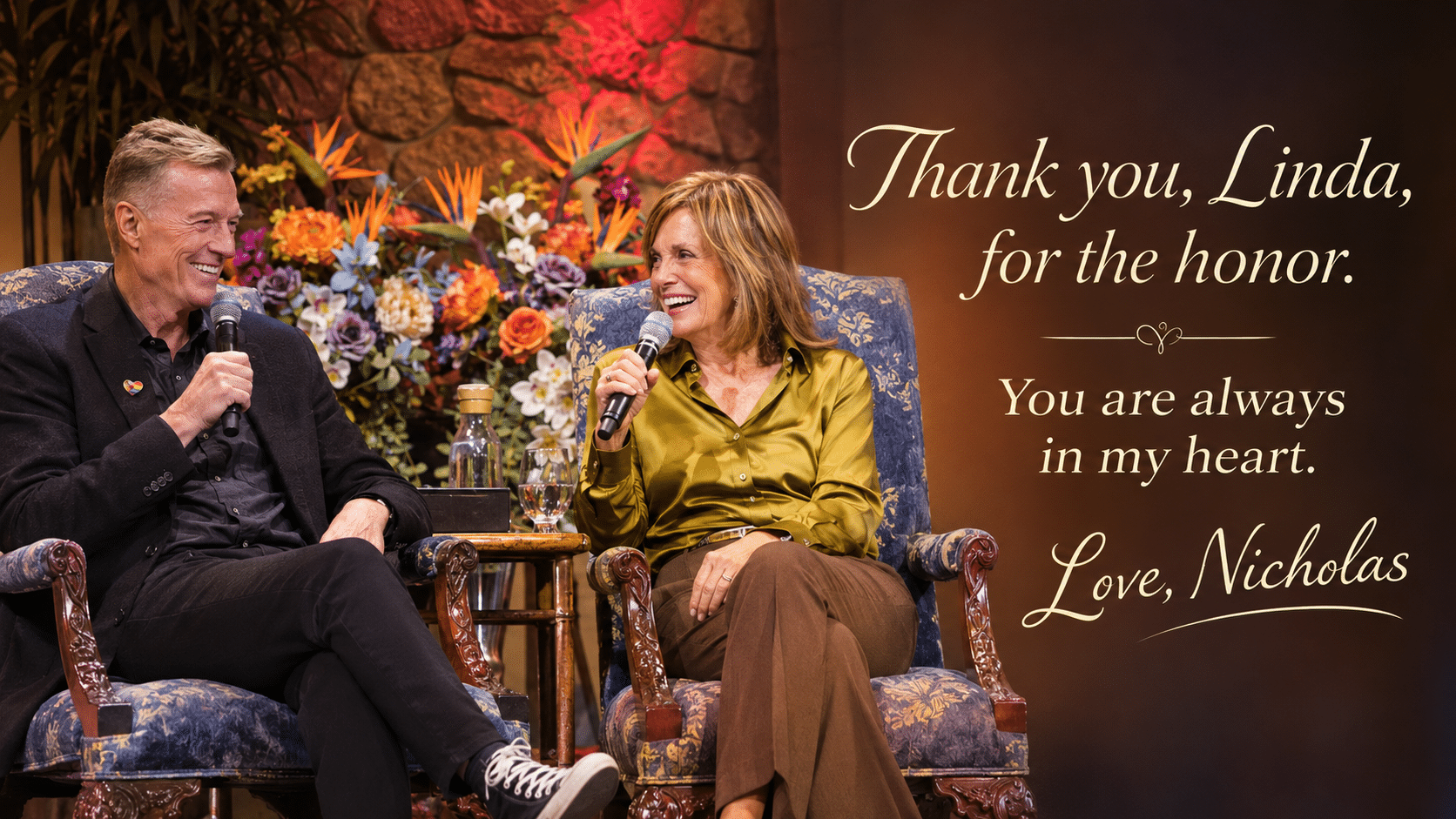
A Night to Remember, a Legacy That Endures
As the evening drew to a close on Friday, November 13, 2026, I was filled with gratitude for the experience of sharing the stage with Linda Gray and witnessing the affection of a community gathered to celebrate her.
Our conversation had been filled with laughter, thoughtful reflection, and moments of unexpected emotional depth. The enthusiastic response to our video tribute, the audience's participation, and the warmth that continued into the VIP reception all contributed to an occasion I will cherish.
Beyond the joy of the evening itself, the event served as a fundraiser benefiting the Spiritual Center of the Desert. I was especially pleased that celebrating Linda could also support a community devoted to spiritual growth, inclusion, compassion, and human connection.
What made the occasion particularly meaningful was the generosity of everyone involved, from the people who organized and supported the event to those who attended, contributed, and helped create such a welcoming atmosphere.
The People Who Made It Possible
An evening of this kind is a collective accomplishment. Behind the conversation onstage were many people whose dedication, creativity, and generosity made the celebration possible.
I want to express my heartfelt appreciation to the Rainbow Connection Steering Committee for its work in organizing this special event and supporting the mission of the Spiritual Center of the Desert.
Special thanks to Allan Badovinac of 24 Forks Private Chef Services, Monica Thomas, and the culinary team, whose talents, generosity, and attention to detail made the evening's food and hospitality especially memorable.
My sincere appreciation also goes to Elizabeth Gold, Executive Director of the Spiritual Center of the Desert, for her leadership and dedication to the success of the event.
I am deeply grateful to Rev. William Conway and Rev. Dr. Dale Olansky for their spiritual leadership and contributions to our community.
To everyone who volunteered, assisted with production, provided hospitality, promoted the event, purchased tickets, attended, or contributed in any way: thank you. Your participation helped create an experience that will remain with us long after the evening itself.
A Personal Note to Linda
Linda, I hope you know how much this evening meant to me.
The privilege of sitting beside you, sharing stories, laughing together, listening to your reflections, and witnessing the affection of an audience gathered to celebrate you was an extraordinary gift.
Your generosity, humor, warmth, and willingness to share yourself so openly made the evening everything it became. I am grateful not only for the experience we shared onstage, but also for the friendship and mutual affection that made it possible.
You continue to demonstrate that an extraordinary life is not simply something we look back upon. It is something we continue to create. I look forward to witnessing all the adventures, discoveries, and contributions still ahead of you.
And to everyone who has accompanied me through these thirteen chapters, thank you for taking the time to discover the remarkable woman behind the legend. I hope her story has brought you the same inspiration, laughter, and appreciation for life's possibilities that our evening together brought me.
Thank you, Linda, for the honor. You are always in my heart. Love, Nicholas.
My work is created through a human-led process in which I develop all story ideas, conduct all reporting, shape the narrative voice, and retain full editorial control. I also use advanced AI tools as part of my workflow—for research support, organizational assistance, drafting, and editing. These tools help streamline production, but the creative direction, original insights, lived experience, and final decisions remain entirely my own. All content ultimately reflects my voice, perspective, and professional standards as a journalist, storyteller, and media creator.